

Quick lil’ reminder: if you’d like to receive every Yellow Green Red post via an email newsletter, sign up here!
Big Kiss Great Grief 12″ (Die Slaughterhaus)
 Die Slaughterhaus poked around outside their hallowed Atlantan stomping grounds and discovered New York’s Big Kiss. They were presumably shoplifting from an outer-borough Target at the time, or at least that’s what I’d expect from a band this cunning. Big Kiss wields a fairly melodic-centered sound, even when it swings side to side like Skull Kontrol, or paces figure-eights like Mission Of Burma. Vocalist Ben Roche spouts his lines with a grumpy, disheveled delivery – I’m imagining Protomartyr’s Joe Casey when his suit jacket gets caught in a taxi door and he has to holler at the driver to stop from dragging him down the street (this must’ve happened to him more than once). Big Kiss share the irreverent outlook of (the on-hiatus?) Brandy, what with song titles like “Ice Cream Cone (Limitless Cruelty)” and “One Weird Trick”. New York City must be a smaller universe than it appears, seeing as Brandy’s Jordan Lovelace recorded and mixed Great Grief. When they turn up the heat, I find myself reminded of those recent-ish Baby Tyler Band and mclusky records, but “Ice Cream Cone (Limitless Cruelty)” moves in a Dinosaur Jr. direction half the time, and “Great Grief”‘s chorus is anthemic in a Lifetime / Avail sorta way, so who knows where they’re coming from besides “compelling, energetic, melodic punk”. It’s a big kiss, and a slippery one at that.
Blak Sagaan Un Sequestro Lungo 10.000 Anni 3xLP (Maple Death)
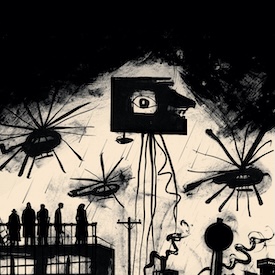 Venetian producer Blak Sagaan (Samuele Gottardello to his parents) released a debut cassette in 2017, a follow-up double LP in 2022, and now most recently, this triple LP. With each successive release, the extent of his vision grows wider – let’s hope Maple Death is out there selling enough plasma to afford the inevitable quadruple Blu-ray release that will follow. A lavish format makes sense, as this ambitious triple-album aims for the full 70mm IMAX experience. “Cinematic” is overused in music criticism (and I’m guilty as charged), but Un Sequestro Lungo 10.000 Anni was explicitly created with that intention, a conceptualized sci-fi realm rendered in pounding Italo, goth-y new-age pop, alt-industrial and eerie EDM – Philip K. Dick is name-checked in the press release before John Carpenter. At 108 minutes, it’s a feature-length experience, with abundant effort going into the album’s pacing, structure and narrative. The intensity ebbs and flows through the use of tense, circular melodies and cleanly retro synths, like Herbie Hancock calling on Trent Reznor to put the finishing touches on a Death Wish remake for today’s Netflix audiences. It’s as demanding of its listener as you’d expect any sprawling, dystopian concept album to be, the sort of project that rewards full attention in this era where none of us can maintain full attention for anything anymore. Personally, I would’ve preferred if Gottardello edited this down to a tight single LP of the album’s Franck Vigroux-styled hard-electro bangers, but don’t listen to me – I can barely make it through a conversation with a friend without checking my phone.
Bullseye Bullseye 12″ (Ever/Never)
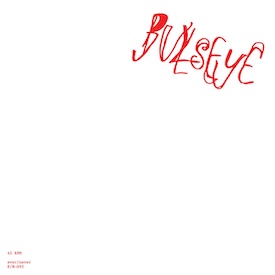 Brooklyn’s twenty-something year-old rockers have made it clear: they are no longer interested in the aesthetic guidance of Jon Spencer, Howie Pyro and Sylvain Sylvain. When it comes to popular forms of sub-mainstream rock, we’re in between leather jacket stylistic peaks, deep in a valley of Crosby, Stills, Nash and Young suedes, and I dunno, I can only assume this must be extremely fun for someone out there? The sounds of NYC-via-Minneapolis rockers Bullseye point to this nu-Americana craze with a well-acquainted approach that entwines Neil Young’s arms in Evan Dando’s, bedraggled flannel patterns clashing in the dying autumn light. If this is your thing, Bullseye are trying to write your new favorite song, tightening what could’ve been extended festival jams into concise nuggets that some might call power-pop, even if there isn’t much overt power happening within Bullseye’s music. Nor should there be: it’s too laid-back, twinkly-eyed and jangly, no narcissistic ambition or big amps to be found, only a desire to kill time with friends in a worthwhile and time-honored tradition. I’m charmed by “Dangers Of The Heart” and especially “Papillyou Papillons”, whose chorus gives all those relaxed-fit slackers the righteously silly sing-along they’ve been longing for. With a song this infectious, I bet some of those middle-aged cheetah print punks waiting for the new Cramps reissue aren’t immune to its charms, either.
Carrier Thresholds 12″ (Carrier)
 Guy Brewer rebooted his electronic music production under the name of Carrier in 2023, and with it came a new vernacular of sound. With kernels of ideas borrowed from dub-techno, IDM, dubstep and jungle, Carrier arrived at something novel: a hybrid of sleek, wet sounds delivered with microscopic precision and a masterful use of negative space. If dubstep is invasive operating-table surgery, Carrier is more like a laser-guided outpatient procedure so advanced that no anesthesia is required, let alone an overnight hospital stay. Last year’s full-length Rhythm Immortal formalized Carrier’s terms of service, and this new three-track EP offers another chilly portal into his unknown. “Cure” has a therapeutic vibe appropriate for its title – I’m hearing skittering water-striders in an ancient temple cave as my avatar’s health-bar recharges. “Scout” also reflects its name; its unintuitive thump / click pattern is firmly centered, matching the tension of a Predator venturing out of his ship and into the unfamiliar tangle of an alien jungle. The b-side’s “Black Channels” falls somewhere in between the preceding tracks, at least as far as intricate detailing and creeping paranoia are concerned. Amongst sleeting percussion, little pockets of greyscale fuzz and droning ventilation draw your attention, like you’re trying to find a path to escape your abductor’s spacecraft in the pitch black. Does this threshold take you to safety, or the engine room?
Crazy Clue Where The Dregs Dwell LP (Beach Impediment)
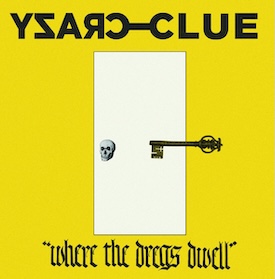 The label’s description attributes Crazy Clue to Bobby Cole of British hardcore ragers The Annihilated alongside “Mike and Jonah from Canada”, though the cryptic, eye-catching artwork, bizarre band name and obsessive attention to detail should already have you suspecting if it’s another excellent hardcore side-project from Fucked Up masterminds Mike Haliechuk and Jonah Falco. Indeed it is, and they surely are having a ball here! Haliechuk and Falco never abandoned savage hardcore-punk for a second in their decades-long careers – they maintain a variety of outlying interests and the inexplicably perpetual energy with which to pursue them – but Where The Dregs Dwell is a particularly feisty outing, even by their standards. With Cole’s classic “Jerry A meets Cal Morris” vocal delivery on hand, Falco and Haliechuk go fast n’ burly, in league with Headcleaners, Battalion Of Saints, Corrosion Of Conformity and Mob 47 to such a fine degree that I keep checking the back cover for a Pusmort logo. Crazy Clue is almost certainly a studio project, which makes me a little wistful, though knowing these guys, I wouldn’t write off even the wildest possibilities. If next week I stumbled across an advertisement for White Zombie’s surprise 2027 reunion tour of Northern Europe with openers The Garden and Crazy Clue, it still wouldn’t be the strangest thing I’ve seen from members of Fucked Up.
Drainolith Drainolith’s Montreal LP (Celluloid Lunch)
 Originally released in a typically-scant lathe-cut edition last fall, Celluloid Lunch elevates Drainolith’s Montreal to a slightly more respectable form of plastic with this new vinyl pressing. Judging from the material within, I can certainly understand the label’s impulse; if you aren’t muttering “sacre bleu!” under your breath while listening to this album, check your pulse! Drainolith’s music interrogates forms of psych-, experimental- and noise-rock with a keen conceptual lens – in a sea of directionless noise groups bashing away for the simple thrill of it, Drainolith offers a unique perspective. Drainolith’s Montreal is one of the project’s more adventurous releases I’ve heard (though there are a number of tapes I hope to someday hear). It opens with a French-Canadian poem recited over the pencil shavings of minimal techno before moving towards a stark performance on what sounds like some sort of single-circuit keyboard… a strange sketch that unfolds in real time. “NMC” presents like solo-guitar Mark Morgan in a beret holding a baguette, “Memetic Flow” hits a goofy / sinister pitch ala Sloth and The Frogs, and the two-part title track butts onto the dance floor like The Avalanches sampling Culturcide. A bonkers combination indeed! I’ve been hoping I might someday encounter a record that makes me say, “Wow, this is as thrillingly screwed up as Lolina”, and wow, Drainolith’s Montreal is as thrillingly screwed up as Lolina!
K. Freund Window Left Open LP (Soda Gong)
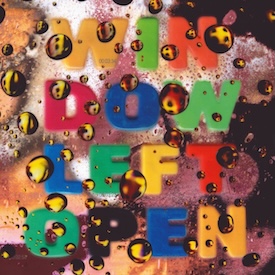 With Freunds like this, who needs enemies? If austerity measures relegate us to one experimental neo-ambient jazz record per household, we could all do far worse than something from K. Freund’s impeccable discography (to include his contributions with Aqueduct Ensemble and Lemon Quartet). He’s certainly one of my favorites in the field – his artwork always bursts with eye-grabbing colors, and his music plays with similar themes without ever feeling as though its been painted into a corner. Window Left Open is another glistening example of what the Ohio-based multi-instrumentalist can do, which is weave traditional sonic elements (specifically saxophone and piano) over and through abstracted elements. Field-recordings, electronic noise and post-production processing all play key roles in his work. Freund leans into glitchier textures through the ten succinct pieces here – imagine Sam Gendel’s brightest moments dropped into the hands of Oval and Jan Jelinek for some of their loving snip n’ clip treatment. I’d call it “noisy”, but those implied images of tender ears bristling in response aren’t the case at all here, as even the roughest textures rub like well-worn blankets, not pumice stone. Each track is fresh and interesting, no matter if his sax is finding solace in a skipping loop (“Hands Around Warm Ceramic”) or his keys fade in and out of video-game resolution on “Pressure Drop”, the album’s warm-welcoming introduction. For now, I’m thankful for every new day in which I may enjoy K. Freund’s music without limitation.
GB Herzsprung LP (AD 93)
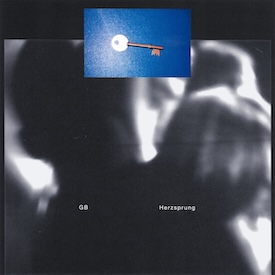 We’ve reached the point where there are as many hot-new records from cultured Danish art-pop acts as varieties of Oreo cookies. Unlike the Spider-Man: Brand New Day raspberry-pretzel Oreos, I actually want to sample each and every artist-statement coming from the spring of fashionable Copenhagen sophisticates. The latest arrives from one Gustav Berntsen, who releases music as GB, which of course allows him to co-opt the classic Gorilla Biscuits logo should he ever decide to do so. Regionally- and aesthetically-comparable artists like ML Buch, Smerz, Erika de Casier, Iceage and Astrid Sonne have enriched my listening life tremendously, and it’s almost a relief to discover that GB’s AD 93 debut, Herzsprung, is merely very good. Perhaps you’ll feel differently – Berntsen is as much of a musical whiz as his Danish peers, writing jazzy indie-rock songs that soak in all sorts of trendy influences, amalgamating the ’90s slow-core styles of Low and Smog with classic dollar-bin standards like The Doobie Brothers and Donald Fagen, and delivering the delicate results with a confident clarity. “The Next Day” sounds like Ceremony’s Ross Farrar singing over an ML Buch composition as performed by The Sea And Cake; “Era” behaves like Tara Clerkin Trio making a bid for VH1 airplay; “Small Gods” is a piano ballad that would have The Blue Nile nodding along in teary-eyed approval. It’s extremely pleasant, well-mannered music, with enough eccentricity sprinkled throughout to keep GB’s friends at Posh Isolation tuned in. My only qualm is that unlike GB’s aforementioned peers, his songs are content to linger on the sidelines, not spotlight-avoidant so much as spotlight-indifferent. There’s a good chance his unforgettable pop hit is still to come, but for now the accomplished Herzsprung dwells comfortably in the background.
Guitar Wolf More Jet LP (Goner / GuitarWolf)
 There was a time – a good number of years, in fact – when it was widely agreed that Guitar Wolf delivered the craziest live rock n’ roll show on the planet. Maybe you were lucky enough to witness them crawling across the ceiling of some sweatbox club in 1996, or you saw pictures of them in Maximumrocknroll like I did, Seiji Wolf craned atop a precarious PA speaker in skin-tight leather trousers and high-heeled boots, guitar mid-flight. I’m not sure who usurped the title from them and when (and to be fair, the Landed “flaming sweater” show deserves to be mentioned in any crazy ’90s live discussion), but the group has stayed true to their path of righteously lo-fi, Chuck Berry-derived garage-rock all this time, with no signs of softening with age. Respect! More Jet is probably like their thirtieth full-length (my brain throbs when I try to count past twelve), yet its stinging Wayne Kramer-esque guitar leads, Cramps-y stomping and cigarette-stained vocals could’ve come from any of the last three decades. The rest of the garage-punk world has long since accepted Guitar Wolf’s in-the-red recording sensibility as common practice, but familiarity doesn’t lead to tedium here: the trio takes a “Land Of 1000 Dances” rhythm and applies it to a song called “9PM Pornmag Planet”, a rockin’ freak-out party that extends into and past a song called “Kung Fu Bikini”. Maybe unhinged rock n’ roll is the secret to longevity and happiness?
Itchy & The Nits Greetings From LP (Total Punk)
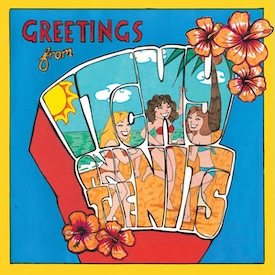 Summer may be winding down here in the northern hemisphere, but it’s permanently beach-party bikini weather over in Itchyland. The Sydney trio known as Itchy & The Nits enjoy criminal levels of fun in their own company, resulting in a growing tally of three-chord budget-rock ditties. No grand statements, no arty posturing, hell, not even a drum that isn’t a kick or a snare – Itchy & The Nits refuse to partake in musical excess, or really anything that doesn’t bring a goofy smile to their faces. The cheerful vocals of all three members remind me of All Girl Summer Fun Band’s communal delight, though I&TN’s uncomplicated songwriting is more aligned with the Super*Teem! record label’s xeroxed offerings, the secondary-school reportage of Television Personalities and, to no surprise, the cretinous hop of the Ramones. These Nits pour refined sugar onto your bowl of Froot Loops and giggle as you scarf it down, daring us to sing along with the catchy hijinks of “Smelly Boys” and “Going Out” as the buzz takes hold. It might be too simple, too cutesy, or too repetitive for punks of a certain aesthetic sensibility to firmly latch themselves onto, but there isn’t a soul on earth, even a malevolent one, that could find reason to denigrate the lighthearted punk-rock of these lovable Aussie goofballs. We should sooner condemn God than Itchy & The Nits.
Mars Live At The Village Gate LP (HoZac)
 Like many who fall into my punk demographic, anytime there’s some new scrap of original no-wave ephemera unearthed, I’m hurrying to take a look. What’s that, an Instagram account that only posts backstage photos and disintegrating handbills of Boris Policeband, Komik-Kazee and Red Transistor? I’m smashing likes left and right. With Mars being one of the seminal founts of no-wave sound and style, a live set from some NYC dive circa ’77 is the sort of thing that will have me dumbly waiting in line like a yuppie at the newest matcha-latte-tinned-caviar bistro. Live At The Village Gate is a curious and entertaining document – their earliest to be released among many other archival live sets – capturing the group with a perfectly crisp clarity. And get this: of the eight songs here, only “3E” was previously released! I was prepared for their visceral deconstructions of punk to zip-tie my wrists and swivel my head, and was pleasantly surprised to witness instead an untutored first-wave punk band swing through their clumsy-yet-frenzied tunes to an appreciative audience. These songs fall more in line with the Dangerhouse offerings of that year, though far less developed and distinctive, revealing Mars in their earliest stages of desire, intent and experience. Fascinating! “Plane Separation” has the neat trick of the two guitars being strummed at entirely different velocities, and “Compulsion” displays some truly tweaked vocalizing, sounding like a newborn Daniel Martin-McCormick hungry in the NICU (not yet a twinkle in the eye of his parents in the summer of 1977). For those who wondered why Mars never had their own artistic response to the at-large serial killer in their midst that inspired so many other punks and no-wavers, we can finally put that mystery to bed with “Son Of Sam”.
Olsvangèr Honey Tangerine 12″ (Oath)
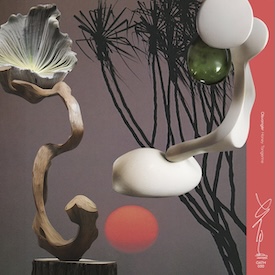 There’s a buffet of electronic dance sounds available out there, and Olsvangèr is capable of gobbling a wide variety without catching ill. Generally speaking, the Berlin-based producer keeps one foot in house and the other in trance, but this six-track EP for the Turkish Oath label opens itself to a variety of moods. Kicking things off with the glacially-paced slow-jam “Source Of Thought” is certainly a choice, but one that I appreciate. It sounds like DJ Screw getting his syrupy fingers on some ’90s British jungle, a sensual after-hours affair with a guy that looks like Phil Collins serving Aperol spritzes (and after you leave, you realize it actually was Phil Collins). “In A Nutshell” hits like the urbane soundtrack to a midnight Pilates class, and then “Tulpa Nine” takes us back to the decelerated break-beat zone, a horror version of Pharrell’s Clipse productions replete with uncredited alien rapping. Those three make for a fine twelve-inch EP on their own, but Olsvangèr blesses us with three more choice cuts in the name of great value. “Sunshine On The Lip” mixes sitar and break-beat like Beck if he grew up in Manchester instead of Los Angeles, and in a display of profane sequencing, “Zoom It Out” follows with a breakdancing bass-line and Philip Glass’s bells. “Some Air” closes on an Ibizan note, high heels by the hotel pool with an Italo sensuality reaching out to take you by the hand. It’s all been swirling around inside Olsvangèr’s head, now available to swirl in yours.
Repeat Offender Weapon Fetish LP (Convulse)
 Computer, please pull up the official list of albums with evil-skeleton Uncle Sams on the cover that suck. My god… it’s blank! These visual signifiers have been useful guides for our musical explorations, and an atomic bomb-wielding skull-face Uncle Sam is a welcoming beacon in the dark for fans of unyielding hardcore-punk. As expected, Repeat Offender’s Weapon Fetish is comfort food for the hardcore ravenous. The SoCal hardcore band play mid-tempo to fast, mean-mugging around the room as vocalist Greg Chacon takes full command with his over-the-top, violent slobbering. Their approach would be in line with the contemporary Youth Attack street-punk-inspired style if it was a little more out of control and recorded a lot less cleanly – the bassist, for example, opts for a tuneful SoCal sound rather than a chain of malfunctioning RAT pedals. I like it this way, as Chacon’s vocals offer more than enough filth in return, resulting in something that sounds like City Hunter, had they grown up listening to The Boston Strangler and seeing Pennywise around town instead of obsessing over Jeffrey Dahmer and Friday The 13th, or the Ultra-Violent EP if it crossed over the Mexican border to get wasted as a teen. Repeat Offender’s song titles are more inspired than most hardcore band names these days: I hope to see Jokes On Youth, Shit Disturber and Every Man For Himself on next year’s Tied Down Detroit flyer.
Sewer Election & Aziza Cadavres Électroniques 2xLP (Total Black)
 The undisputed vicar of Gothenburg noise, Dan Johansson, fires up his Sewer Election alias for an early power-electronics summit of the finest caliber. I think what a lot of modern harsh-noise practitioners tend to miss is the restraint, the confident poise, the ability to locate that pleasantly disturbing combination of frequencies and let it simmer. It takes discipline to delay the explosive denouement, or to maybe even deny it entirely (in an act of that sadism they all love so much). Artists like Atrax Morgue, Will Over Matter and Maurizio Bianchi knew how to use time to their advantage, their rudimentary electronics only capable of so much, and I’m picking up a similar sense of limitation-plus-imagination at work with Sewer Election and the mysterious Aziza. Opener “Decentering Servant” is a fine mission statement, this corrosive analog slow-build, but the double LP format offers plenty of room to stretch into other ideas, from wobbly, plastered feedback to downed power lines writhing on the ground, acoustic drones of ill repute and maybe even someone’s worn-out old drum machine, its red power light flickering ominously. It’s a long ride, with a few of these eleven tracks dipping over past the ten-minute mark, and I’m thankful they didn’t decide to shrink Cadavres Électroniques down for accessibility’s sake. There is no quick-release dopamine, no distracted doomscrolling in this dark magnificent pit they’ve excavated.
You-On New Side LP (12XU)
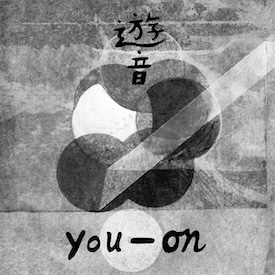 You-On is Jim White drumming and Masami Tomihisa playing piano, but you know what? I demand more than that. In the various You-On promotional photos I’ve seen, they’re sipping coffees and babysitting dogs, quietly engaged in small acts of domestic joy. I want Jim White reading me the morning news, seasoning my lentil curry, and watching basketball by my side on the couch – his thoughtful observations on the game are welcomed, too. The man adds a level of delicate significance to any musical project he touches, and while I can only creepily speculate about the off-stage Jim White his loved ones get to experience, I’m thankful for his vast and prolific musical output to nurture me in this world. New Side is fairly straightforward improvised jazz, notable for the plain beauty of its sketches, which favor playfully teased-out melodies and tender skittering over discordant aggression or skronk. There are moments that get a little rougher, like when the silly play-fighting of sibling children tips over into actual fighting, but it’s mostly a mild-mannered affair, elegant poetry-in-motion from two confident and curious players. In a duo setting, improvisation can mimic human conversation, from the buzz of excited dialogue to the listlessness of awkward lulls; No Side‘s initial encounter offers a cordial repartee.
 Back to top