

Birth (Defects) Fictional Days LP (Reptilian / Expert Work)
 Traditionally, the covers album that arrives at the end of a band’s life cycle isn’t their finest moment. I suppose The Spaghetti Incident? is probably someone’s favorite GnR album (and I hope to meet that person someday), but in Birth (Defects) case, the band seems both at ease and inspired by delving into some of their direct influences on Fictional Days, touted as their final record. Here, four original songs share space with five covers: Sonic Youth, The New Flesh, The Comsat Angels, Nirvana and SSD. One could easily suss out the group’s interest in cloudy post-punk, seminal hardcore, self-destructive noise-rock and 1992: The Year Punk Broke from their original material, but there’s something freeing about taking a song you already love and splattering it with your own paint. I still don’t need to hear another Nirvana cover for the rest of my life (I’ve got eleven words why: “Smells Like Teen Spirit” (Cinematic Version)” by Tommee Profitt featuring Fleurie), though while I thought the same for SSD, Birth (Defects)’ extended take on “How Much Art” closes in on the divine, like Clockcleaner’s rendition of “Ready To Fight” had they thought it through for more than two seconds. With that sentiment in mind, I’m having fun imagining their originals as covers: in another reality, Laughing Hyenas could’ve written “Youth” in a stained-carpet practice room; “Deceiver” could’ve fired up Rein Sanction’s debut EP.
Callahan & Witscher Sorry To Hear That 2xLP (Post Present Medium)
 The music of Callahan & Witscher allows itself to be approached from a couple of different perspectives. You can crack open a Super Lyte by the above-ground pool and blast them on a digital-streaming playlist full of Sublime, Lit and Sum 41 (free tier, full of loud ads), your tropical-bubblegum vape on hand to quell any remaining brain activity, or you can get situated in your friendless, meticulously-curated apartment next to your rare noise-tape collection with their lyric sheet in hand, mulling over the multitude of insider quips, sarcastic jabs, experimental Easter eggs and ironic mockery that fuels these songs. That’s the mix: extreme low-brow pop meets extreme high-brow conception, both ends of the spectrum delivered with such fluency, potency and self-disgust that the whole thing bewilders wildly; even the duo themselves seem disoriented by what they’ve created. My personal approach to their music has been closer to the former scenario – I love a good sticky-sweet pop song, the more unabashed and shameless the better, and for as non-musical as the majority of Callahan and Witscher’s respective discographies are, they sure know their way around bawdy, major-chord hooks, delivering them in an overloaded, internet-native manner. For as deep as I am in our shared underground space, a significant portion of their references or call-backs fly over my head, and as their intentions often seem to be rooted in some sense of negativity (what the internet used to call “butthurt”), I am content to not dig too deeply, if only for my own safety. You don’t create your own personalized Funkopops and Airbnb-aesthetic fake neon wall decor if there isn’t some serious loathing going on, be it inward or outward.
Genre Is Death Attractive People LP (In The Red)
 Hightail it from Atlanta to New York City, grow your black-dyed bangs out over your eyes, record your debut album with Martin Bisi in Gowanus. Genre Is Death recognized a successful life trajectory when they saw one, and have been rewarded with an In The Red full-length debut as a result. Don’t let the confusing band name confuse you – this duo (with uncredited drummer?) plays music steeped in the tradition of early no-wave noise-rock graveyard blues. Cramps bootlegs, Teenage Jesus’s twelve-minute discography, Live Skull, Boys Next Door before they became The Birthday Party, there’s a rich history of skinny, black-clad outlaw artistes that Genre Is Death undeniably draw inspiration from. Nothing wrong with that! Their songs are methodical and repetitive, often without any sort of payoff – imagine Kilynn Lunsford covering all of those noisy, two-note Lamps songs with half of either’s intensity. The lyrics are repetitive as well, with song titles doubling as choruses and oft repeated for two, three, four minutes. In that way, it can kinda drag, but I’ll cop to spinning Attractive People stone sober in my tidy little room, a sub-optimal experience for their brand of noise-rock sleaze. “I See Red” should be experienced in the bowels of CBGB, Lydia Lunch walking masked boys on leashes as Jayne County and Bob Bert toss GG Allin out on his ass for the fifth time that night.
Gentilesky Dream LP (Slovenly)
 Slovenly Records, punk rock diplomats to the world at large, snag a winner here with Gentilesky’s sophomore album. The group is based out of Sardinia and Turkey (wish I could say the same), and they take a familiar punk style and deliver a fresh kick to its keister. Theirs is a tensely charged post-punk aesthetic, similar to legends like Wire, Mission Of Burma and Gang Of Four (“One Way Out” and “Dreamland” really bring the GOF vibes), though future legends like Sweeping Promises bear a similar resemblance to much of the material here as well; maybe even a lil’ Sleater-Kinney and Nape Neck managed to sneak in there too. Gentilesky present with an urgency that makes the music feel important, particularly evident in “Chasing The Light” and “Money Making”, the one-two punch that opens the album. It’s a winning formula: you tether some athletic bass-lines to a shrewd drummer, send the guitar darting wildly around it, and find a singer who belts it out like it’s their last chance on Earth to sing. And it’s garage-y enough that your small-minded leather-jacket crowd won’t have any complaints either (not that we’re concerned with their pleasure). Here in my large American city, I am privileged to witness exceptional post-punk bands rolling through town on a constant basis, yet the urge to trade it in for Gentilesky and a stone Sardinian farmhouse is undeniable.
Jasmín It’s Girls Night / Longhair 12″ (fabric Originals)
 Amsterdam’s Jasmín offers a fresh perspective on the concept of “girls night” with this quick new EP from the fabric Originals label. Her “It’s Girls Night” isn’t suited to pomme frites, Caesar salad and chardonnay at a posh restaurant with a selfie wall – it’s gurgling, hyperactive techno ready to ruin your outfit like you’re at a GWAR show. The track has that propulsive feel of early ’20s Blawan, and while the grid is firmly shibaried in place, there are all sorts of additives popping off, not least the escalating four-note melody, deployed like a poison-dart. At a brief five minute runtime, there’s no need to bring it all down to the kick, but Jasmín does precisely that three minutes in. Stuff your rules! “Longhair” also eschews any obvious correlation to its title. This one lurks menacingly – if it were a member of the mob, it’d be the young guy with face tattoos and sunglasses who guards the door, his eccentricity tolerated by the old-school bosses due to his loyalty and unflinching viciousness. Are people really dancing to “Longhair” at fabric London, and if so, how? Slow-motion simulated knife fights? Gratuitous PDAs with untrustworthy exes? With more questions than answers, this two-track EP makes for an alluring tease.
Simon Joyner Tough Love 2xLP (Sophomore Lounge / BB*ISLAND / Grapefruit)
 You’d think that after something like thirty full-length recordings, Simon Joyner might’ve run out of songs to write, but this here is an authentic, rare-breed singer-songwriter. If anything, his wits continue to sharpen and the lens through which he views the world grows clearer, to the point where he might just non-consensually steal your heart if given access to six strings and a microphone. The forebears to his artistic form of choice jump from the music immediately – Lou Reed, Townes Van Zandt, Leonard Cohen – and while there probably isn’t room left on the pedestal of seminal rock legends for anyone born after World War 2, Joyner’s body of work speaks for itself. A real “hidden gem” of a singer, and nowhere is that gem-status more clear than on Tough Love – with guitar in hand and understated rock-band accompaniment when necessary, he peers into the heart of life with tenderness and wonder. His lyrics are a treat (Sophomore Lounge’s Ryan Davis releasing this record is a clear-cut case of “real recognize real”) and easy to follow, even if the paths they take are unexpected, funny and bittersweet. Lemme pass you the tissue box if you’re queuing up “Last Call For Karaoke”! And in an inventive conclusion, all of side D is dedicated to the title track, a deep rumination of family and love so potent I’ve been avoiding listening to it, lest I turn into a teary wreck right before dinner. Joyner’s music works like an emotional fracking pump when you least expect it, dislodging your deepest buried feelings. He must get a perverse thrill from it, the sicko.
L.O.T.I.O.N. Multinational Corporation Machine Hallucinations LP (Toxic State)
 I hope to someday live in a world where L.O.T.I.O.N. is no longer needed, but unfortunately it seems their presence is more essential than ever. They recognized that big-tech was burrowing into our brains well before this whole nonsensical AI Ponzi scheme appeared like a herpes sore on the chapped lips of American capitalism. Our digital-surveillance hellscape might not have bloody eyeballs popping out of uzi-wielding robots, but it’s a hellscape all the same. L.O.T.I.O.N. cover all of this in grisly detail on Machine Hallucinations, which is almost too fun for its own good – how can I turn my rage into action when I’m too busy headbanging to these exhilarating blasts of digital metal? It might be their catchiest album yet, with any fraying elements of hardcore giving way to a brash, no-nonsense take on the industrial groove-metal of greats like Ministry, Rob Zombie and KMFDM, alongside gabber techno, cyberpunk aesthetics and that Spawn (The Album) soundtrack (Slayer and Atari Teenage Riot’s collaboration in particular). It’s really banger after banger here (with an unexpected electro-twee ending!), this frantic concoction of speed-metal guitar riffs, vocals indebted to the acid froth of Japanese noise-core, and the hook-laden industrial style that Ministry pioneered. When I pull up Instagram, I should be fed grainy clips of “Absolute Insanity” performed on an outdoor festival stage to 60,000 Brazilians waving anarchist flags and going nuts, but L.O.T.I.O.N. remain an underground organism, probably forever. How long until my phone can predict and fabricate my wildest dreams?
Malaphor Frogs In The Pot / In The Waves 7″ (Related)
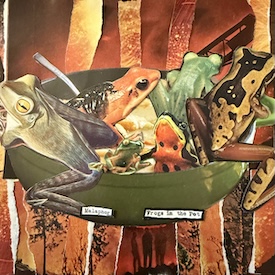 Malaphor goes hard in the paint, and by paint I mean “funky, piano-forward alt-pop”. There was a time when I couldn’t turn on MTV without being accosted by some new spastic, smirking Poindexter – Harvey Danger, Barenaked Ladies, Fastball, it goes on – and now that we’re so far removed from this era, I’m kind of starting to miss it, even if that notion fills me with shame. Enter Oakland’s Malaphor: their song “Frogs In The Pot” is an absolute romp that nods in that general direction, a ’90s coffeehouse sound with the zing of three espressos. With all hands on deck, they sound like Ben Folds Five after sitting on a bee, the music bouncing good-naturedly as vocalist Brendan Casey offers a tidy metaphor for the state we’re in. “In The Waves” calms things down with a tender waltz, recalling John Grant’s commanding, sardonic croon. If this Malaphor single completed one of those “what TV show are you?” internet questionnaires, it’d be Party Down for sure: lovable underachievers too smart for their own good, suffering as they serve all sorts of unreasonable twits who inexplicably have all the money and none of the sophistication. They’d deliver a silky-smooth rendition of “In The Waves” and you just know some jerk would come up and request Billy Joel, without tipping no less!
Mermaid Dub Forever LP (Beer &)
 Tokyo dub scientist Mermaid charmed my pants off with his debut album Dubmaid last year and does it all over again with Dub Forever, his second proper album for the exquisitely-named Beer & Records label. His music will pull a smile out of the sourest faces, linking ’90s digital-dub soundsystems with the cutesy vibe of cat cafes and the wonderment of a record shop’s well-stocked dollar bin. Typical dub conventions are folded into paper planes and tossed off the balcony, with big sine-wave bleeps, dazzling dub effects and a big yellow sun with a smiley and black sunglasses looking down from above. It’s inherently fun music in the spirit of the Jahtari camp, with the firm belief that anything can become a dub if you have enough love in your heart. Check “Money”, which gleefully swipes from Sam Smith’s “I’m Not The Only One”, or “Gavotte”, which flips a late 18th century François-Joseph Gossec composition into a cuddly Pokémon lullaby. The amount of fun being had here is outrageous, as Mermaid casually showcases the borderless joys and omnivorous appetite inherent to dub music. Try napping to “A Nap” and you might float away entirely if you neglect to use a weighted blanket.
Octonomy Saturnalian Rites LP (Hosianna Mantra)
 If purple smoke arises from the Sistine Chapel’s chimney during the papal conclave, it means that they are currently listening to Octonomy’s Saturnalian Rites. Catholicism is just one big creepy cult anyway, right? Heidi Lorenz’s Octonomy project delves deep into such scenes of occult intrigue with her mood-darkening electronic music. Saturnalian Rites is her vinyl debut (her discography began with the most ominous of formats, FLACs), and it delivers a cohesive mix of varied-yet-connected styles. The (pre-)industrial rhythms of Test Dept, the shadowy spelunking of Lustmord, wordless chants from unholy choirs, gleaming new-age synths that beam like light through the cracks of a prison tower’s stones: they all conspire to form a steady-flowing suite of dark-ambient electronics. It would take years of research to grasp the topics that Octonomy is delving into through the album’s imagery and its accompanying instrumentals (a brief scan of Wikipedia wouldn’t suffice) – Saturnalian Rites demands cracking open ancient dust-covered texts that might accidentally release a demon, straight from Giles’s library (RIP). It’s precisely the wrong time of year for me to be blasting “Winter Solstice”, but by the time I’ve reached “Ruined Abbey of Thelema”, the cold, musty air of a freshly unsealed crypt envelops me…
Puriden Public Aging LP (God Of Whine)
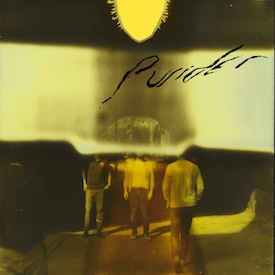 “Getting old” is a universally unappealing (and generally avoided) topic for popular music of any strain (brief exceptions granted to Leonard Cohen and Johnny Cash), which is probably why the contrarian in me finds it appealing. Philly’s Puriden cut straight to that point by titling their debut album Public Aging, and they kicked it off with a song called “My Body Is A Machine That Hurts” for good measure. And the irony is, when compared with today’s headlining emo pop-punk acts, they’re not even that old! While some of their grey-bearded peers are still singing about first kisses, dumb jocks and prom night, Puriden take a more age-appropriate path, writing about overdraft fees, religious hypocrites and the ways that love can devolve into complacency and isolation. Musically, Puriden are rooted in that late ’90s emo-infused pop-punk era, and they mix it up quite a bit within the vicinity: I’m hearing The Anniversary, Grade, Braid, The Jazz June, Knapsack and Hot Rod Circuit if I want to leave room for two friends in my MySpace top eight (whose Vagrant Records sampler CDs I’m currently borrowing). There are poppy guitar leads, introspective swells of emotion enhanced by guest violin, vowels pronounced like Tom DeLonge, jazzy chord changes and upbeat “do do do” Third Eye Blindisms; Puriden keep things lively and engaging, balancing out the often dreary, reality-stricken subject matter. Might be tricky to get noticed within such a corporatized, well-trodden, social-media-gamed genre, but hey, at least they’re old!
Traumprinz Life 3xLP (All Possible Worlds)
 Much like an actual prince in your dreams, Traumprinz arrives unexpectedly and breathtakingly. This German ambient-techno producer is arguably the German ambient-techno producer, having refined his techniques through numerous releases on the still-killing-it Giegling label before moving to his own All Possible Worlds imprint. Under a handful of aliases, he continually goes big in ways no one else thinks or cares to do, ways that seem designed to tantalize the home listener (and frustrate the second-hand vinyl market). He casually released an eight-LP set as Prince Of Denmark ten years ago (with different mixes appearing on different records, distributed at random!), and now under his trusty Traumprinz moniker we get Life, a Soundcloud dump from a few years ago available on limited triple LP vinyl. If you were lucky enough to order one in the hour-long window they were available, you know that he also included an additional, exclusive LP in the package for free, just because. What a mensch! The music here is vast, over ninety minutes (not including the untitled fourth LP); these tracks spread their wings with grace and confidence, locating the pleasure zone through patient repetition, subtle variation and a deep sense of heart and soul, blatantly contradicting the idea of techno as the music of unfeeling electronic machines. Singling out any one track feels shortsighted here, but if you want a taste, jump right to “Trippyaf”, where he combines a robotic pulse and outer-space zaps with a wordless vocal(?) that travels for minutes without interruption.
2601 Untitled 12″ (Heaven Smile)
 Last month’s Storm On Earth EP from the endlessly-monikered René Pawlowitz inspired me to peep a new one from another highly-regarded polyonymous techno producer, Mammo. He’s apparently so good at aliases that his legal name remains a mystery, putting him a step above Buckethead. He’ll occasionally release music under his first name (Fabiano), but he consistently changes project names between releases. Alongside Mammo and Fabiano, you can find his records credited to glorified matrix numbers: EPs from 2301, 2302, 2401, 2501 and now 2601 (all of which correlate to the year of production). Unlike his more abstracted Mammo material, 2601 offers two cuts of effervescent tech-house, as clinical and unidentifiable as their name. The a-side establishes a choppy beat upon which a dub effect is stretched like taffy for a good seven minutes. The flip is less club-friendly, working a Detroit-style subterranean feel with a bank of sonar sound-effects you’d expect to hear from mission command in some ’90s military submarine movie. Nothing wrong with either, though there are dozens if not hundreds of dollar-bin techno singles from the last thirty years that offer precisely the same sensations and, in many cases, feel far more genuinely anonymous. Dig in the beat-up dance boxes on the floor and the shop clerk will hand you change if you pay for Snow Bones’s Remote Viewer EP and Snookerboy’s My Lovely Pixel with a ten-dollar bill. Or, play the long game and wait to see if Untitled ends up alongside other under-appreciated gems in twenty years.
Uriel’s Bath Uriel’s Bath 12″ (Felt Sense Recordings)
 Researchers have failed to genetically fuse ambient electronics and twee… until now. The Australian duo of Julia McFarlane and Thomas Kernot are blissed out and taking us with them, as these four songs (released earlier in the year on CD) have hit vinyl for your favorite after-hours spot. These delightful tunes all rest in the folds of trance-y electronica, with McFarlane’s voice guiding us safely through the softest trip possible. “Two Great Lamps” sets the tone early, spaced-out arpeggios pacing back and forth as McFarlane’s clipped syllables breathe some humanity into the music’s shiny plastic shell. “Beautiful Hats” features the most direct vocal from McFarlane, singing like she’s in Dolly Mixture or Girls At Our Best over cosmic squiggles, and it’s a dazzler – I can already picture NTS’s phone-lines lighting up when the resident ambient DJs spin this one on a quiet Wednesday evening. “Your Humble Servant” is the first track to bring in a hi-hat pace – there are no kicks or traditional-techno rhythmic elements to be found here – and it captivates with an odd violin(?) loop and some hushed chords. They end with “Uriel’s Bath”, a playfully-creepy lullaby that doses the bizarre synth-led storytelling of Call Back The Giants with the wave-pop sensibility of Australia’s early pioneers (Essendon Airport come to mind). “Ingenious” feels like too strong a word, but how else might I explain that I just ordered a copy of Sarah McLachlan’s “Fallen (Gabriel & Dresden Anti-Gravity Mix)” single in a misguided attempt to replicate the pleasure of Uriel’s Bath?
Yambag The Psycho 7″ (Convulse)
 My favorite scrotally-inspired hardcore band fires up another eight blasts of high-velocity hardcore-punk, once again care of Convulse Records. The formula hasn’t changed here: the Cleveland group favor a fast-core sound not unlike the turn-of-the-century action on 625 Productions and Six Weeks, that moment where the relentless speed and sudden time-changes of power-violence met the cascading riffs and circle-pitting rhythms of old-school thrash-core. Yambag never rest on any particular part for long, but the ferocity of these eight songs is pretty unwavering, often sounding like No Comment covering Circle Jerks songs at four times the speed. Every element is delivered in a rapid-fire style, which means that sure, the drummer is blasting away, but the bassist is also breaking his wrist to keep up and the vocalist is spouting off full lines of lyrics in the time it takes to cough. A seven-inch is the perfect format for this style (and, honestly, the perfect format period), and eight songs is neither too much nor too little. And while I’d expect the requisite live shot on the cover to display a singer jump-kicking twenty feet in the air for this sort of aggro hardcore style, Yambag takes the moment to remind us of their freaky Cleveland heritage: I’m not certain if the band on the cover even is Yambag, and the singer is wearing a huge papier-mâché mask that nearly doubles his height, enough to make Snooper green with envy.
Zoh Amba Eyes Full LP (Matador)
 Zoh Amba has built up an impressive resumé as an out saxophonist, but Eyes Full is a hard turn down the dirt road of rockin’ Americana. Why not? Their vocals on Jim White’s “I Don’t Do / Grand Central” were a highlight of my 2025, and while Eyes Full is far more straightforward singer-songwriter fare, it showcases Amba’s rambunctious style nicely, passionate bordering on volatile. On the acoustic guitar tracks, Amba channels Bob Dylan in an Appalachian setting, picking and strumming with callus-building abandon; if we needed someone to flip the dreaded stomp-clap whoa-oh into music worth listening to, I’d nominate Amba for the job. It’s not all campfire rollicking, though – they dip into slackerish indie-rock befitting the Matador seal of approval as well, plugging into some road-worn cabs with the boys. “Dead End Street” (which, like many of the songs here, features Jim White on drums) certainly exists within Pavement’s universe, “Odd Jobs” behaves like Sheryl Crow on dollar Coors night and “Thousand Years” could’ve found a comfortable home on any of Mudhoney’s last few albums. I’ll concede that electric/acoustic rock music isn’t the trickiest sound to find one’s way into, but Amba is naturally, immediately comfortable on Eyes Full, their jeans worn down ragged over time, not factory distressed. I’d love it if Matador could finagle this into a full-scale genre exchange program – we might finally get the spiritual jazz album that’s been lurking under Kurt Vile’s MF Doom trucker cap all these years.
Anadol & Marie Klock Manivelles LP (Pingipung)
 The connection between Istanbul’s Anadol and Holving, France’s Marie Klock continues to bear fruit. Weird-ass fruit, mind you: think of a pawpaw, something that looks like a pear, tastes like a banana and scratches like a mango on your tongue. Their initial collaborative release from 2024 delighted in its made-up world of oddball retro-pop, and Manivelles moves onward in delirious good nature, as pleasantries have been established and their friendship has solidified. Anadol is still on the control board, swirling together Turkish pop, French chanson and German krautrock with ease, kooky joy and unfiltered cigarettes. I’d love to see all of her keyboards and synths, because the sounds they conjure are uncommonly vintage, recalling anything from the original Nintendo Entertainment System, Switched On Bach, Stereolab and Klaus Schulze, often at the same time. I continue to resent my linguistic failures, as I really wanted to know what Klock is on about here – the title translates in English to “Cranks”, a funny self-dig in line with Klock’s brazen playfulness. Lucky for me, English translations appear on the inner-sleeve (and accompanying Bandcamp page), and I’m not disappointed. “Rentrer à la Maison”, for example, describes familial neurosis from the feminine perspective with a chorus of “whenever you go home / you start off with great intentions / and then shove ’em up your ass / nice and deep, nice and deep”. Now that’s a universal language I’m sure many readers can share: the annoyance in dealing with well-meaning yet clueless parents.
Container & Will Guthrie FERN 10″ (Cave12)
 With safety in mind, I put on my coveralls and oversized goggles prior to spinning this new collaborative EP from American noise-techno juggernaut Container and Australian percussive polymath Will Guthrie. Neither of them are known for stepping lightly – while their typical sonic modes differ, the sense of being vigorously shaken by the collar comes part and parcel with their respective bodies of work. Of course, neither are beholden to satisfying preconceived expectations either, as FERN is textural, nuanced and playful, not the full-throttle squash for which I was prepared. Opener “Murky” lives up to its title, with Guthrie running through an array of percussive elements over a notably placid buzz from Container’s box of tricks. “Sifting” is a quick splash of Container’s Fort Thunder influence, replete with intercom-squawk voice and emergency buzzer, whereas the second shortest track, “Maybe”, paints layer upon layer of drum-roll cacophony like a Sissy Spacek seven-inch. “Tablecloth” is the rightful centerpiece, and closest to what I expected from these two: after a purposely slow start, Container builds a restless groove and Guthrie cooks it to a crisp, reminiscent of Mindflayer but also just, well, better. I don’t want to say that the zero-dynamics wall-of-sound is beneath them at this point – routine sonic enemas are good for one’s health – but Container and Guthrie have too many ideas, and too many tools with which to realize them, to take such an easy route.
Crown Flash Crown Flash LP (Union Editions)
 Union Editions takes a modern approach towards being an underground, avant-garde record-label. Rather than simply release records, the label exists through a variety mediums: records and tapes, sure, but also apparel, posters, patches, books (both art and written publications), silkscreens, football scarves… I can only assume perfumes and tinned crudité are in the works. It’s a cool approach, building out their own aesthetic community through limited-run physical objects, and one of the label’s latest offerings is the debut album from Crown Flash. The duo of Filippo Brancadoro and Francesco de Figueiredo have pursued the fringes of noise, psych and experimental music separately since the pre-Covid age (remember Heroin In Tahiti?), and as Crown Flash they offer a suite of stylish, gallery-ready electronics, keyed up to troll any narrow-minded audience. Their music is techno-informed but experimental in nature – any chance of a straightforward beat is lovingly tweaked and prodded into forms too antagonistic or abstracted for dance crowds. “Trauma Plot” is a good example: a cool break-beat dominates, though they can’t help but manipulate it into twists and overlay bizarre vocal manipulations. It’s mildly sinister in a way that shows a reverence for the IDM forms they are manipulating and distorting, somewhere between Aphex Twin, Amnesia Scanner and Vanity Productions. In Crown Flash’s hands, no ambient passage is safe from harsh disturbances, no sleek runway groove free from the possibility of being abruptly ripped off-grid.
Devon Rexi Meets John T. Gast Breathstep LP (Accidental Meetings)
 John T. Gast has been like three steps ahead for years now, even if those steps often lead to strange, enigmatic places few people will ever aspire to wander. You just never know what the guy is going to do, only that it will be worth hearing, and this new collaborative album with equally inscrutable (though lesser-known) Dutch trio Devon Rexi is case in point. Breathstep combines richly international AutoTune vocals with early dubstep beats – a selection of alternate musical histories aligning towards a hazy future. I’m going to assume Devon Rexi are actually doing the Farsi vocals themselves, though I’m not ready to rule out the possibility that they simply swiped some of them from secret YouTube channels and pirate radio stations on the opposite end of the globe, and it often sounds like Coki remixing early ’00s Damian Marley tracks with the voices and musical signatures of electro-shaabi. Lots of clean dub sounds and dirty effects, with the sense that MIDI sampler keyboards small enough to fit into backpacks are the primary culprits. It reminds me of the adventurousness I’d find on labels like Bokeh Versions and Heat Crimes, cryptic and fascinating music that doesn’t offer an obvious way in – you have to run your fingers across the ornate hardwood door until you find the little notch that clicks open to the secret chamber beyond. “2furious (Liberate Mix)” is a great way to start your search: a dark-sided dub with jammed frequencies and wet-echo vocals wedged in every open gap.
Feeble Little Horse Bitknot LP (Saddle Creek)
 When Feeble Little Horse cancelled their big summer tour in support of their 2023 Saddle Creek debut, I felt their pain without bearing direct witness to it. For as long as I’ve been around, there’s never been a harder time to be a cool young band in America than right now (nepo babies and private-school millionaires excluded); Feeble Little Horse’s Bitknot, poppy as it may be, flashes those warning signs of fatigue, frustration and malady. It’s also inventive, charismatic and catchy as hell, and while I need to go back to their first two to make sure, I’m gonna go wild and say that this is their finest yet. As with prior efforts, they continue to scrappily re-imagine poppy emo indie (ie. Horsegirl, The Pains Of Being Pure At Heart, Wednesday, etc.) through a post-100 Gecs, post-Sophie digital frame of reference. They’re a real band, and they take their real guitar hooks, sugary vocals and immaculate drum fills (the drums are so good!) and jam them all into a sticker-covered laptop through a frayed USB cable, digitizing and crunchifying the sound of bedroom-basement live action into something uncanny yet human. I’d probably enjoy their sound as a thrown-together mess, but it’s evident that Feeble Little Horse’s wild choices are deliberate, simply because there’s no way they’d end up with this captivating, smoothed-out-slappy sound by sheer luck. If your head isn’t bobbing and swaying to the tweaky hooks of “Poison” and “Dior”, I’m going to assume you’re wearing a neck brace – let’s hope you heal up in time for their substantial tour schedule this July and October.
God’s Hand Police Lorry / Wind-Up Toys 7″ (Hard Art / Illiterati)
 Cover art of the month goes to God’s Hand, delivering some sort of heavy-leather furry police fetish that I didn’t know existed (and I’m not just saying that to misdirect you from the heavy-leather furry police outfits in my closet). The photo is credited to “BULLCOP 54″… do I dare google? On second thought I think I’ll leave them be, and while I wish Sargeant Bulldog Officer was in the band, I’m content to imagine him singing “Police Lorry”, a fine slab of British street-punk from Iowa City (where else?). It’s melodic and un-intimidating in a UK Subs sorta way, perhaps akin to Pork Dukes if they stopped trying to be so crude for two seconds. “Wind-Up Toys” isn’t too far off, sounding like The Dickies or The Ruts or something aspiring to them, first-wave Chuck Berry-inspired punk that makes its way to a fun shout-along chorus, something to rev up the boot-boys in the back of the pub. It’s certainly more straightforwardly punk than God’s Hand’s debut EP (also reviewed in these pages), and while it doesn’t elevate beyond the confines of the well-established form, God’s Hand still has a powerful ace up their sleeve: that damned rubber-fetish cop-dog on the cover. He’s still lurking out there somewhere, I can feel it.
It’s A Setup It’s A Setup 7″ (Two Two One Press)
 With their debut EP, Spokane’s It’s A Setup throw it back to the time before things all went wrong for screamo. Their sound hearkens back to the dirty, spastic hardcore offshoot of the late ’90s, one still inherently rooted in DIY ethics, where the term “screamo” itself was a self-deprecating shorthand for hardcore that integrates emo’s quiet / loud dynamics, metal-core’s chaotic patterns and the blast-beats of grind (often with song-intro samples that sound like they were taped off the TV, also found here). Were it 1998, It’s A Setup would’ve had the same shot at making it to No Idea, Sound Pollution or Hydrahead, but most likely would’ve just released their seven-inch themselves, stuffing a manilla envelope sleeve with inserts. I’m hearing Ottawa and MK Ultra in particular in this self-titled EP, where stoner-y intros lead into frantic blasts and voice-cracking screams, all with community college production (and that’s not a diss – this EP was recorded at Spokane Falls Community College). Amazingly for the style, they aren’t old folks reliving their youth, but apparently young enough to write a song like “21+ Punk Show Is An Oxymoron”, bemoaning clubs that deny teenagers at the door. Relish these days, fellas! It’s all downhill from here!
KiMiMi ИМА LP (Calax / Conatala)
 One thing that happens when I write all these record reviews is I subject myself to the threat of overexposure: take a thing that I enjoy, overload myself with way too much of it, and then notice as the dislike or resentment starts bubbling up. I feel like that’s happened to me with music in the “random field-recordings” style, either as an embellishment or central motif, but as I sit here now, batting my eyelashes with infatuation at Shinya Ohno’s KiMiMi project, I realize that a great record can cure all negativity in a heartbeat. An AI overview might explain KiMiMi as “experimental folk over a backdrop of construction field-recordings”, and while I required a mere gallon of water to type that myself (I’m a thirsty guy!), ИМА is far more beautiful than that basic description implies. The construction sounds (recorded on site at the “Arimasuton Building”, an improvised(!) building primarily of reinforced concrete) are near and dear to Ohno, having a personal relationship with its inhabitants and creators, and his music, majestically orchestrated, mirrors that gentle intimacy. The instrumentation is dazzlingly vast – melodica, ukelele, gaida, guitar, flutes, organ, xylophone, and more – and almost falls backward into the children’s ball-pit bordered by Phil Elvrum’s early work as The Microphones, the domestic strum of Tori Kudo and the avant-garde experimentation of Robert Ashley. The sounds of chatter and distant drilling help triangulate a physical space, one that KiMiMi fills with tenderness and warmth. I forget whoever originally made that “dancing about architecture” line, but I invite you to look up pictures of the Arimasuton and tell me it’s not architecture that dances to the dulcet sounds of ИМА!
K Wata Give U Space 2xLP (Short Span)
 Emptiness never sounded as gorgeous as it does on K Wata’s full-length debut for Short Span, Give U Space. Short Span’s covers are consistently attractive, but I don’t think any of them have fit the music as perfectly as what we see here: an antiseptic 3D rendering of “a room” at its basest level, something I’d imagine the initial 1992 digital sketches of Doom might resemble. K Wata’s music revels in its behind-the-eyelid colorlessness, a dub techno that feels like it was vigorously disinfected before being allowed entry into the open world, yet teeming with cinematic intrigue. The beauty is that the disinfection was incomplete: there are voices, scratches, unexplained motions and swerving tension within these downtempo grooves… imagine a pond’s flat brown surface with an assortment of predators lurking below. I’m reminded in ways of Space Afrika’s murky elegance, Jan Jelinek’s cut-up clicks-in-dub and also those earliest Hyperdub EPs, the immediately pre-dubstep era when artists like Burial, Kode9 and The Space Ape knew they wanted to make melancholy electronic music that spoke to the impending social digitization and were still figuring out how. While like-minded in many ways, K Wata drafted his own template here, soft enough to fall into and disorienting enough to keep you from climbing out.
No You No You LP (VP Texi)
 No You is the pairing of Davy Kehoe and Suzanne Kraft, arriving with this fully-realized album right from the jump. Davy Kehoe is responsible for introducing AutoTuned harmonica to the world on his solo debut Short Passing Game (one of 2017’s very best!), whereas Suzanne Kraft (real name Diego Herrera) left his fingerprints on all sorts of cool productions over the last few years, from chill-wave to Balearic to downtempo house and so forth – there’s even a killer Soft Rock For Hard Times single. I can sense a little nervous, first-date energy on No You, resulting in a somewhat conservative display of the duo’s talents. No You falls closer to rock than techno, though it’s certainly not either – think more along the lines of downtempo synth-wave, electronic music that favors rock instrumentation if not its harder-edged stereotypes. Both Kehoe’s penchant for staccato krautrock rhythms and Kraft’s pastel haze are all over the record, but it kind of plays out like a testing of the waters – you can sense that the duo want to jump in with an obnoxious cannonball but decide to calmly use the ladder instead. There’s no shortage of ideas – certain songs have me remembering Blank Dogs (and their penchant for burying the vocals in ten layers of effects), others strut upright with a Pender Street Steppers vibe, and then there’s “Invisible”, a blatant My Bloody Valentine tribute that pretty much nails it, guitars swirling and percussion absent. I’m going to keep spinning it for now, and hope that this is the inception of a long and productive relationship.
Storm On Earth Storm On Earth 2 12″ (Storm On Earth)
 In an excellent feature on the First Floor newsletter, René Pawlowitz AKA Shed goes into a few dozen(!) of his various aliases and explains what they signify or aim towards with regard to the music he creates under them. He describes his Storm On Earth project as “peak-time techno tools with no soul … hard drums and repetitive grooves with no bigger ideas behind it”. I was already deeply endeared to the man, but I find this coldly-stoic (and extremely German) admission of Storm On Earth’s “no soul / no bigger ideas” deeply satisfying. I know that he means it, and isn’t self-negging in hopes of praise, but the four tracks found on this new EP are masterful in their hard-charging brainlessness. “Stale II” hits like an anonymous Hard Wax purchase from any of the last three decades (this is a positive thing), and “Fish” is briny house music, ready to dislocate the wrists of any hardcore voguers trying to keep up. It’s absolutely nothing special, but as we now know, “nothing special” is admittedly by design – if you love the discrete elements of pure techno music and want to bear witness to a master building, layering, tweaking and orchestrating them, Pawlowitz takes you straight to the source as Storm On Earth.
Tara Clerkin Trio Somewhere Good LP (World Of Echo)
 Like many of today’s interesting new groups, Tara Clerkin Trio don’t invent a brand-new aesthetic so much as offer an exciting combination and refinement of pre-existing styles – a few base familiarities to guides us into the new. “Curation” is kind of an ugly word, but I can’t help but hear that in the music of Tara Clerkin Trio, that this is a group of deep music heads who have the talent and good taste to mix and match a range of stylistic elements until arriving at a distinctive Tara Clerkin Trio Sound. Prior releases had established the trio’s general parameters, and Somewhere Good is now their finest effort to date. Within, you’ll find the post-jazz / math-rock fusion of late ’90s Thrill Jockey; Bristolian trip-hop; the contemporary jazz of downtown NYC; indie-pop; psychedelia; dub. These are all very good things, and Tara Clerkin Trio are so at ease with each other that a sharply-cut guitar loop, twinkling keys and fat techno bass pads flow together into charming pop song with the complementary timelessness of screaming over a blast-beat. I’m reminded of Antena and The Xx, Dido and Astrid Sonne, K Freund and Valentina Magaletti, sometimes at the same time, other times separately, mixed up so vigorously and joyously that it all turns the color of Tara Clerkin Trio. Which, betraying their deeply British origins, is so bright you’ll want to wear shades.
Timmy Vulgar / Jimbo Easter Timmy Vulgar & Jimbo Easter 7″ (Celluloid Lunch)
 Detroit is full of real ones, but Timmy Vulgar and Jimbo Easter are two of its realest. (The last time I saw Timmy Vulgar, he was laughing maniacally in a parking lot about my band’s rider as we drove away… a tale for another time.) You’ll surely recognize Vulgar from his work with Human Eye and Timmy’s Organism (among countless others), whereas Easter has done time in The Piranhas and Druid Perfume (among his own wooly assortment of bands, projects and criminal charges). Their paths have naturally intertwined through the years, this most recent check-in taking place on one brain-blasted seven-inch EP. It’s free as free can be, two guys with guitars, synths and at least one functioning drum-machine swinging wildly out of orbit. Trying to make logical sense of it is a fool’s errand (and you’re hearing from one now), but from what I gather, Vulgar composed the three a-side tracks and Easter led the charge on the flip. The a-side is full of acid-soaked guitars and gook of a gobbeldy nature – it sounds like Electric Eels and Dan Melchior licking every last toad in the swamp (which, incidentally, is literally what Vulgar is singing about on one track). The six(!) b-side tracks are even less formalized, zonked-out caveman damage befitting the cover image of Vulgar and Easter as obelisk-gazing primates. They’ve already written enough formal songs to last us a lifetime – Vulgar and Easter delved deep into the primordial source here, and they didn’t even have to shine moonlight into their anuses to get there.
David Watson & Bill Nace On Bats LP (Amish)
 For your newest bi-monthly Bill Nace offering, I submit this collaborative album with bagpipe player David Watson, released care of the Amish Records label. I sense that Nace is at his most energized when performing alongside someone who can match his sustained, fiery tones with a prominent level of their own, and that’s certainly the case here. Watson unleashes those familiar, soul-stirring bagpipes into incensed and dazzling new configurations and Nace wields his taishogoto as both sword and shield. With the bagpipes more or less a constant sonic presence in the air, Nace has decisions to make: does he plow straight through, carve out a serpentine detour, or remain in place while hopping on one foot? As a collaborator, Nace is a keen listener – all paths are considered, and they squeeze a whole lot of juice out of their relatively simple setup. “Wishbone” in particular lets it all hang out, with some of Nace’s fastest finger-work yet handily matched by Watson, like two sprinters who set their best times when racing each other. It’s crazy to me that there is some other band calling themselves Geese when the moniker is far more befitting the racket that Watson and Nace have conjured here, a ferocious battalion of honks, squeals and electric sighs.
 Back to top