

Bad World Maker Of Rules 7″ (Convulse)
 I dunno, man… you’re gonna sound a whole hell of a lot like Cold World, and call yourself “Bad World”? Cold World rule of course, and I have no doubt that their style of hardcore is one of the most fun that a person can directly participate in, be it moshing, stage diving, singing along, covering, directly aping, or ripping off wholesale for your lame streetwear clothing company (it happened!), but at least cover up some of the evidence! Granted, lots of bands have followed this path of late, the groove-oriented, metallic-riff, capital-H technique that Madball, Crown Of Thornz and Merauder bestowed upon the truly hard (and the wannabe gangstas) since the early ’90s. But when you’ve even got those secondary Alex Russin vocal parts sung just like Alex Russin… I don’t know what to tell you. Plenty of other contemporary beatdown signifiers can be found on this brief EP as well, like the awkward “(blank) of (blank)” phrasing, a well-known guest hardcore-vocalist spot (Ben Cook on “Last Of Me”), and an OG-tribute cover song (“Nineveh” by Only Living Witness). Bad World offer a perfectly competent display of this style, but their brazenly borrowed ideas serve to remind me of how potent and exciting their inspirational hardcore sources can be, and prevent me from appreciating whatever the unique life experiences of Bad World’s members must be, as they’re absent in Maker Of Rules. Do you think if they find out I’m tight with the handsomest Cold World scab guitarist they’ll only beat me up a little bit?
Bastard Collective Manchild LP (Transylvanian Recordings / Black Claw)
 Man Is The Bastard is truly unkillable. Like a dystopian-horror video game boss, the innovative hardcore institution always comes back bigger and uglier, brandishing grotesque new weaponry upgrades. The current iteration, Bastard Collective, brings in folks from Gasp and No Comment alongside core Man Is The Bastard personnel (with a different Nick Turner than our friend from Cold Sweat and Walls) for a mix of familiar and uncharted territories. Since the group’s inception, Man Is The Bastard’s songwriting has exhibited a lethal-prog quality unlike any of their peers, and it remains evident in the unexpected stop-starting of the many aggro hardcore cuts here. Multiple voices are present as well, a cast of volatile characters to frighten and forewarn as bass-centered riffs punch holes in hard surfaces. What’s newest (and weirdest) on Manchild is the occasional presence of a horn section, leading at least one internet commenter to call it “Man Is The Bastard’s ska album” before hightailing it. Listening to “Funky 1”, “A Song That Has No Place In This Town” and “Kicked To The Curb”, you’ll hear what they mean, but Andy Beattie’s vocals lend Bastard Collective’s bursts of power-violence that authentic No Comment feel, and the bad-trip analog collages of Mitchell Brown (AKA Professor Cantaloupe) make for surprisingly flamboyant interludes, far lighter than Bastard Noise’s typical industrial-horror fare; Manchild isn’t any one thing but Bastard Collective. As Professor Cantaloupe, Brown released an album with Don Bolles a quarter of a century ago – maybe he could make a phone call and we could add a member of the Germs to Bastard Collective’s CV?
Bent Light The Daylight Is Ours LP (Memory Waste)
 When your LP is limited to a hundred copies, you don’t really have to consider whether people will take notice of it while flipping in a record shop bin, because what are the odds of a new copy actually making it into one? As such, you are free to deliver cover art as blurry as Ben McOsker’s Instagram (go look it up and be amazed) without any concern for marketability; the true (few) heads will find it. So it goes for CT guitar-improv duo Bent Light, whose morning-after ambient is ripe for peaceful visitation. Two lengthy tracks comprise The Daylight Is Ours – this music doesn’t acknowledge the hectic pace of modern life, but rather the more complex emotions brewing within us that we choose to ignore. With extra lengthy trails of echo, Michael Slyne and Russell Linder engage in a tender back-and-forth with their guitars, conjuring a similar “space alien seen walking through the forest” feel as Grouper. They’ll futz with “tape machines” and a delicate array of effects pedals if they need more apparitions in the atmosphere, but you can drop the needle anywhere on these two sides and find solace in their soft, casual noodling. If I only heard tell of Connecticut from the psychedelic guitar records that have come out of there over the last ten years, I’d assume it must be the most enchanting, star-speckled pasture this planet has ever known. Will one of these acts finally come clean and make a record with an emotional resonance to match the endless pageant of Dunkins and Subways on I-84?
Blason Blason LP (Bruit Direct Disques / Tanzprocesz)
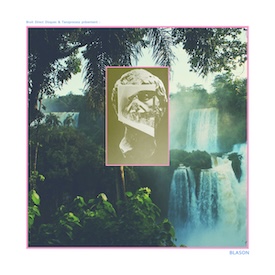 It can go only two ways: either you need an endless supply of free-form electronic synthesis music or you never need to hear this sort of thing again. I’ll leave that up to you, but if you’re one of my brilliant friends in the former camp, allow me to introduce you to Blason, care of the ever-adventurous Bruit Direct label. The credits don’t go beyond “Blason”, but it has to be the work of an actual human being, as I don’t think robots are talented enough to twist a variety of knobs and switch the patches out on sequential circuitboards… yet. Whoever it is, they certainly go wild here, two side-long pieces that seek out their analog system’s limitations and rapidly test them, like a virus traveling inside your latest Partiful invite. The second side was actually recorded at the INA GRM (the CBGBs of intellectual experimental electronic music) so you know Blason’s bonafides are in order. Generally speaking, I prefer electronic music from people who failed out of eighth grade, but there’s no denying the pleasures of Blason, all manners of wet clicks, static-laced swooning, frizzled lurking and ghosts in the shell, particularly on the more frenzied first side. I’m afraid that if I stare into Blason for too long, I might suddenly find myself trapped inside…
Cherry Cheeks D.O. And The Bytes LP (Total Punk)
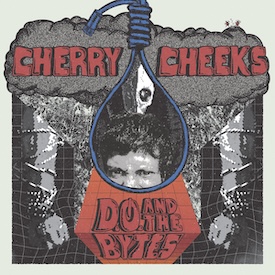 I’m not sure Kyle Harms AKA Cherry Cheeks was even alive when dial-up modems were the only way one could get online, but that distinctive digital crunch appears early on this newest Cherry Cheeks album. It’s called D.O. And The Bytes, and it slaps a bunch of technological concepts together lyrically, in service of a thematic statement within a genre not generally known for thematic statements: egg-punk. The world wide web, AI girlfriends, floppy discs, ones and zeros, pop-up ads, digital surveillance and techno-fascism are all invoked through this package of hook-laden, kooky-synth fortified, helium-voiced songs for punks who happily eat cereal for dinner. I appreciate that the lyrics directly respond to our increasingly untenable digital hellscape, and that they do so without fumbling into righteous moralizing or, even worse, total corniness. It doesn’t hurt that the music could support generic skateboarding / weed / pizza tropes and still sound pretty good. Harms’s songwriting chops are honed here, in league with long-haired punk troubadours like DD Owen (I thought the album was about him at first!), Jay Reatard and Kyle Thomas. If you’ve ever savored a cutesy-babyish, occasionally glammy sort of punk rock sound (quick test: do you own any Rezillos, Dickies or Alberto Y Lost Trios Paranoias records?), you’ll want to bleach your mullet blonde to D.O. And The Bytes, the first egg-punk record to convince its audience to double-check their Instagram security settings.
The Clog The Clog LP (no label)
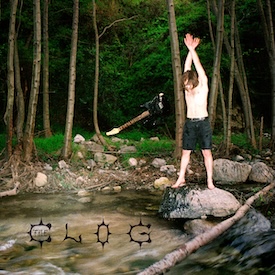 It feels like a blessed day whenever I become aware of some new freak’s existence, like The Clog for example. That’s the moniker George Albert Carpenter chose for his musical output, both solo and with a handful of friends willing to go along for the ride. He better appreciate those friends, as this ride isn’t for everyone! The album-opening “Fog Devil” and “Kissing Great Whites” offer strong support to that recent Melvins and Napalm Death collaboration by sounding like a cross between the two of them: muddy noise-rock bootprints with an unexpected blast-beat and some ill-advisedly goofy vocals. I made sure my seatbelt was securely fastened, only for the rest of the first side to kind of languish in a zero-gravity psych-folk zone. “Come Ye & Follow Me”, for example, is closer to Father John Misty channeling Danielson Familie than anything King Buzzo would point his silver curls in the direction of. The second side rouses things up with “Lordly Lord”, sounding like Animal Collective: Live At Guantanamo Bay, and settles into more mild-mannered indie-psych, left-of-center as it may be; the album ends with the most candidly indie-rockin’ song of the record, “An Ordeal”, recorded live in Monterrey, Mexico. It’s one of those droll situations where I don’t love the music, but I think I love the guy behind it, fully committed to his own ever-evolving bit. This shouldn’t come as a total shock to Carpenter – one doesn’t view themselves as the second coming of John Lennon if they named their project after a ball of hair caught in a pipe.
God Of War Molly Picture LP (Julia’s War)
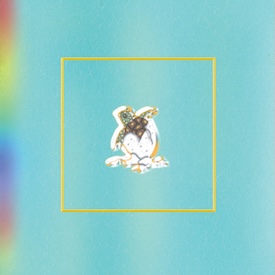 If They Are Gutting A Body Of Water are on a Death Cab For Cutie trajectory, would that make God Of War their Postal Service? It’s TAGABOW’s Douglas Dulgarian collaborating with two folks from Hooky, whose homespun electronic pop is, to its credit, more likely to employ old-internet graphic design than a manager / publicist team. A good part of Dulgarian’s appeal comes from the sense that he truly doesn’t give an eff – I keep waiting to hear that right before their inevitable Coachella set, he squandered his big break by wandering off into the desert with some models and pro skaters he met while smoking behind the stage. Hooky don’t seem to be earnestly seeking anyone’s approval either, which is the right mindset for God Of War’s Zumiez-friendly alterna-gaze to materialize – well-trodden emo-pop melodies like those found in “Lindas” and “New Deal” are ripe for some semi-ironic detachment, garish MIDI augmentation and hyperpop vocal effects. The trio experiment with contemporary (and possibly cracked) software while wistfully retreating to the emotional womb of the early aughts, when the sounds of Paramore and Dashboard Confessional leaked through the closed doors of older siblings in a magical way. As such, it’s really not far from what TAGABOW are doing, just a little less Boss DS-1, a little more post-Animal Collective / post-100 Gecs outlandishness. The distance between Narrow Head and $quib on an NTS playlist has never been shorter, and until it closes up entirely, Molly Picture is well-suited to plug that gap.
Kyoufu Shinbun 死 LP (Bitter Lake Recordings)
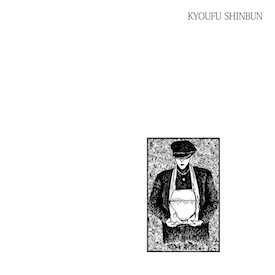 1990: not a great year for harsh industrial noise-punk! Such was the moment when Kyoufu Shinbun released their debut tape, 死, surely greeted warmly by the tens, maybe even dozens, of listeners that received it. That’s how you know it’s legit: Kyoufu Shinbun made no concessions to the pop-industrial of the moment, or even seemed aware of any of that besides maybe some Ministry and Coil. There’s no confusing 死 with Nine Inch Nails or Skinny Puppy, though it’s not entirely without precedent either. Through its sixteen songs, the album offers junkyard guitar akin to Hijokaidan, the electro-shock drum machines of early SPK, violent-devil vocal-gargling that would’ve fit in on a variety of early Japanese noise-core flexis, and the sense of darkly isolated madness inherent to Jun Konagaya’s Grim project. In other words, it’s killer! A track like “死姦” kind of encapsulates the vibe in four minutes: a bent interpretation of classical-style keys is progressively poisoned, then abruptly shifts to a stompy drum-machine / bass-guitar rhythm, with distorted vocals half-rapped as a single feminine scream is deployed over and over, a stand-out sample in any haunted-house starter pack. Whew! There’s nearly as much volatile sonic information crammed into any given track as Boredoms of the same era, but far uglier, more battery acid than psychedelic acid. A most bitter lake indeed!
Lolina gg EP 12″ (Relaxin)
 Lolina’s music has Rubik’s Cube appeal: if you grasp the basic conventions and principles of exactly what the hell is going on, it might become your new obsession. I’ll cop to understanding fifty-percent at best of what Lolina is up to on any given record, and as her techniques consistently shift, the rapid-fire sampling methods on one record might not have anything to do with the psychedelic-horror hip-hop beats that appear on another. For me, it’s about as fun as experimental music gets! And now on this quick twelve-inch single, we get one of her most straightforward tracks in years, “gg”, a friendly reminder that Lolina excels at doing whatever she wants to do. It’s a Gossip Girl-inspired vocal track: Lolina’s spoken voice verges on singing over a choppy rhythmic loop and melancholic pads, far catchier than it has any right to be. Appropriately, it feels like the edge-of-mainstream pop that will arrive three years from now. Following Lolina’s original “extended” version, we get an electro-house remix by the trollishly-named art-hipster duo New York. It’s a bit more straightforward, licking and sticking Lolina’s voice onto a traditional dance-pop beat, and I love it too. The b-side grants none other than Arca VIP access to the original “gg” files, which she wipes clean of beats and loops, opting instead to lightly time-stretch Lolina’s vocal onto a pile of post-modern pastel pillows, the results akin to a drunken teenage phone call that bares its emotions without following any logical sense. There’s never a wrong time to dip into Lolina’s work, but gg feels especially right.
Beatrice M. & Tim Reaper BMTR001 10″ (no label)
 Tim Reaper is a round-the-clock jungle factory: merely scanning a list of his upcoming and recent DJ gigs, records, mixes and radio shows is overwhelming, let alone what it must be like to actually live it. Last year, Reaper graced the Resident Advisor mix series with a seven and a half hour-long mix, enough to get you through a full workday shift. I’m no authority on the man’s endless activities, but I do like to pop in from time to time, as I did on this cool new white-label ten-inch EP. He’s in the studio here with one of the classier dubstep producers of the moment, Beatrice M., for two quick slips of effortless breakbeat polish. “Robot” opens on a bed of sumptuous pads, teasing out a half-time ragga bounce with some sexy cyborg sparkle. It shares the rhythmic charisma of Hessle Audio’s peak Ramadanman and Pangaea sides, now wrapped up in high-end designer packaging. “Biota” is another riff on the same idea, beatific space-chords locking fingers with a throwback breakbeat and disembodied female vocals “whoa”-ing, because you know they’re feeling the groove as they float in liminal space. Jennifer Lopez and Lady Gaga probably pay someone an obscene amount of money to loop tracks like “Biota” at a low volume in in their fiftieth-floor penthouse powder rooms, and if Tim Reaper is too busy for the job, I would like to formally announce that my schedule is open.
November Növelet All Your Love 7″ (Galakthorrö)
 We normally wait years between dispatches from Mr. and Mrs. Arafna, yet All Your Love arrives mere months after their most recent full-length, Electrical. I’d love to tell you that you can skip this one, but unfortunately you’re going to need to saddle up for those severe German shipping costs all over again. November Növelet don’t miss! “Cry Today” is upbeat and uplifting by their standards, its subtle pulse and melodic beeps far more elegant than they have any right to be. A great dance track if your typical dance moves include silently weeping with your head in your hands. “All Your Love” arrives as the b-side and it’s a real haunted-houser, lugubrious (so very lugubrious) dark-wave industrial that they built their decades-long reputation on. Mrs. Arafna exhales her vocals as though drifting in and out of a coma on her deathbed, and I can clearly picture Mr. Arafna right by her side, solemnly changing the water on a bouquet of black roses. November Növelet’s music has been deathbed-derived since its inception, which is wild considering that they’ve been at it since 1994 (even surpassing the longevity of the world’s other beloved dark-wave married duo, ADULT.). How long do you have to lay in your deathbed before it’s more appropriately classified as your lifebed?
Swedish Magazines Laughing Problem 12″ (Tall Texan)
 Not sure how the premise of a “musical collective from Austin, TX / Los Angeles, CA” makes you feel, but this four-song debut from Swedish Magazines rocks with an appropriate abundance of style. They’re credited as the duo of Marley Jones and Tom Triplett from the OBN III’s / Snooty Garbagemen camp, so either one of them must’ve moved to LA or they are enlisting secret undisclosed Californian rockers to complete what is, amazingly, not the first hard-rockin’ band to call themselves Swedish Magazines. If you want to go further into their biography, you’ll have to write them a letter yourself, as significant backstory isn’t required to enjoy Swedish Magazines’ buzzy, psych-tinged sound. Picture a rattlesnake scurrying across a long Texas highway under the scorching high noon sun, only to be flattened under the tires of The Jesus & Mary Chain and Kyuss. That might be too cinematically self-serious, though, as there’s an inherent playfulness within Swedish Magazines’ sonic outlook. I’m reminded of the ways that Black Time poked and prodded at garage-rock, kind of trolling it while also upholding its traditions – Swedish Magazines seem to take a similar approach to long-chugging psych-rock grooves, open to possibilities and, if you can believe it, actually having some fun along the way. “In The Hills” and “Loaded Gun” party like a harder-edged form of that excellent Spiral Dub album (RIP Chad Kawamura), whereas someone had the sharp idea to kraut-ify a Judas Priest-styled riff on “Dressed For Pleasure”. If they aren’t dressed up like Queens Of The Stone Age at the casino, don’t ruin my fantasy. If they are, attention George Clooney’s tequila company: you can send that million-dollar licensing check for “Dressed For Pleasure” to Swedish Magazines care of Tall Texan Records.
Sweeping Promises You Say I Romanticize LP (Sub Pop)
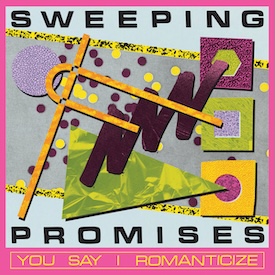 A few years ago, Sweeping Promises sweepingly promised us an album on Sub Pop, and while they didn’t have to tease us with such a lengthy wait, they certainly made it worth our while. You Say I Romanticize arrives like that unexpected burst of shower water when someone flushes the toilet: a scalding shock that gets you reflexively quivering. Opener “Shooting Shadows” establishes this intensified fury, with Lira Mondal’s vocal delivery dialed up from sung to screeched (yet remarkably still on key!). This might be the punkest-sounding album Sub Pop has released in years – recorded in Sweeping Promises’ Lawrence, KS home studio by guitarist Caufield Schnug, they’ve retained that Feel It Records back-alley grit, the guitars burning hot new-wave and the bass as resonant as a rubber band. It’s the sound that drew us towards Sweeping Promises in the first place, though it’s Mondal’s striking vocals that have elevated Sweeping Promises to one of the greats. Her voice is powerful yet controlled – think of the X-Men’s Cyclops wearing that visor to restrain his otherwise wildly shooting lasers – and while I can picture her banging out some excellent no-look first-takes in the booth, it seems that they spent a little more time massaging her vocals here, what with layered harmonies, well-placed back-ups and a full exploration of her wide range. Along with some of their leanest meanest songwriting yet (“Rapture, Or…”, “Shooting Shadows” and “Last Man” are exceptional from an already-exceptional band), You Say I Romanticize finally redeems Sub Pop for dropping the Dwarves in 1993, or at least is a step in the right direction.
The Thugs Mighty Tiger Dubs LP (Aagoo)
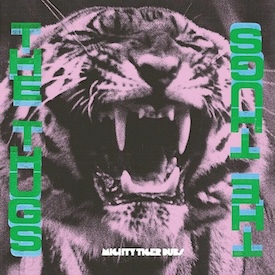 No, this isn’t Les Thugs finally translated into English, but perhaps something even less expected: grotty Italian dub music! Like pretty much everyone I know (myself certainly included), Sicilian artist Nicola Giunta got bit by the dub bug, in his case while making visual art back in 2021. His infection was severe to the point that he felt compelled to emulate it himself, care of this project with multi-instrumentalist Andrea Davi, The Thugs. Like pizza and days off work, even mediocre versions of dub music are generally pretty enjoyable. That’s how I’d rate Mighty Tiger Dubs, some obvious dub-tourism from a post-punk mindset that offers no new insight into the genre, nor does it deliver such a heady trip as to stick out among its myriad practitioners. Upstroke guitars brush against typical bass-lines, simmering keys and echo-webbed percussion, all exactly as to be expected. The sole wild card is Giunta’s vocals, gruff wordless shouts that are noisily distorted to such an extreme degree, you’d think he was tracking backing vocals for a Lightning Bolt album. That’s the beauty of dub music, really – over a sturdy dub foundation, you can sing with the voice of a precious angel or violently dry-heave without disturbing the music’s eternal hypnotic force.
YHWH Nailgun Magazine 12″ (4AD)
 The post-screamo, experimental art-punk realm was overdue for a fresh kick in the pants, and it arrived last year in the form of YHWH Nailgun’s debut, 45 Pounds. My personal reckoning with that record is ongoing (read “reckoning” as “blasting it in my car in August with the windows up and air conditioning off”) but I was immediately ready for more, which has arrived in the curious form of Magazine. Whatever YHWH Nailgun are doing, it’s not the norm, so while a one-sided twelve-inch probably isn’t what anyone precisely hoped for, it’s refreshing nevertheless. Musically, I presumed that YHWH Nailgun wouldn’t (or couldn’t?) simply duplicate the highly combustible splendor of 45 Pounds, and in a strange turn of events, I was right. Magazine maintains certain aspects of the group’s formula while swapping out others: Zach Borzone’s steel-wool vocals are as stylishly menacing as ever; the synths of Jack Tobias and guitars of Saguiv Rosenstock continue to sound like neither-nor, but rather cybernetic squeals and alien engineering. The biggest shift from 45 Pounds is that Sam Pickard hung up his rototoms, perhaps the defining signature element of YHWH Nailgun’s debut. He’s still a dazzling player, but his patterns are comparatively decelerated throughout Magazine‘s ten tracks, giving the album less energy, if perhaps more room to breathe. Luckily, their songwriting remains condensed, mind-bending and inky – imagine Rorschach blots with sharp, precise, purposeful angles that its creators can replicate at will. If YHWH Nailgun come to harness the full extent of their powers, no one will be safe.
Binaural Prototype 1 Untitled LP (Concentric Circles)
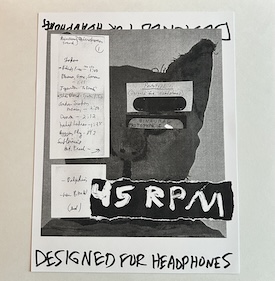 Concentric Circles isn’t any old obscure-reissue label, it’s Jed Bindeman’s obscure-reissue label. As far as record freaks go, he’s consistently ahead of the curve – it’s happened more than once that I went looking for some specific weirdo rarity on Discogs that I thought only I was aware of, and there he is, quietly minding his business, the sole American with a copy for sale. His lust for outsider music of the highest caliber is a public service, and one that you can subsidize by buying a copy of this truly unknown Binaural Prototype 1 album. From what I gather, this find is particularly out-there: it’s impossible to authorize and thusly unauthorized, as the material came from a random unlabeled cassette he found at an audiophile’s estate sale, the project name conjured by Bindeman from writing on the tape in lieu of any further clarifying information. I love the idea of “found” tapes – random answering-machine break-up calls pulled out of a dusty bin otherwise filled with Herb Albert and Barbra Streisand – but the nutso beauty of this one is that the music is actually worth your time. It’s a wild headphones affair, with presumably high-end electronic gear used to create synthesized library music, bizarre for its time (the early ’90s?) and ours. The pre-recorded vocal snippets recall the madcap sampling techniques favored by Chris Korda and Philip Brophy; along with dazzling, audiophile-friendly electronic patterns, the whole thing is eerily compelling and fresh, like Mark Mothersbaugh and Seymour Glass running wild together on some new dystopian sci-fi Apple+ show. A Bindemanning of the finest order.
Celebrators Deliberation LP (Tomothy)
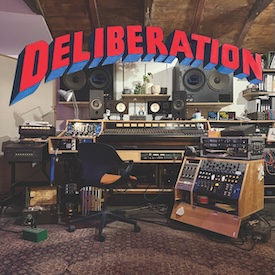 Tomothy is a record label and recording studio in Los Angeles, its name a portmanteau of owner-operators Tom Pinkava and Timothy Waldner. The two of them also record music together as Celebrators, and Deliberation airs out their reels, collecting twenty-one songs from 2021 through 2025. Joined on most tracks by drummer Josh Duron (sorry Josh, they’re not going to start calling it Jotomothysh), the Tomothy crew is much too excited to remain seated on the sidelines recording and distributing other peoples’ music. It’s safe to file Celebrators under the dance-punk umbrella, though they seem to bring a new concept to each track, even if the mood generally hovers between skittish and frantic. Some songs remind me of that initial connection between Black Eyes and The Rapture, others pogo with the zest of early Zickzack singles, and there’s at least one that sounds like John Maus fronting Blank Dogs. That’s the beauty of having your own actual studio – there’s no need to hurriedly maintain the same guitar tone and drum-kit if you have the keys the place. Why not try to remake Marquee Moon and Duty Now For The Future in your own image, with a borrowed synth, a vintage mic from the swap meet and an enthusiastic friend with just as many ideas?
Debt Rag It Is Clear What’s Going On LP (Post Present Medium)
 When you actually, truly deconstruct post-punk from its orderly shackles, the results are not going to be pretty. The music will not be dance-ready: anti-grooves will happily set up camp where grooves normally exist, and casual fans will find themselves alienated and confused. Those of us who appreciate upended expectations will rush to the front of the room (now with plenty of available space), and hope that the band is Debt Rag, Olympia’s self-described “adult punk band” who behave like neither typical adults nor typical punks. Working with a taped-and-puttied drum / bass / keyboard formation (and a modest heap of horns, noises and auxiliary percussion), Debt Rag take the concept of no-wave and thrust it into this 2020s dystopia that no 1979-era Arto Lindsay or Sumner Crane could have conceived. Marissa Magic’s bass offers mutant-funk lines not unlike Erase Errata and The Contortions, though it’s the only element that provides the comfort of a typical ‘real band’ feel. Around it, songs play out in ways both primitive and unintuitive, emerging as naturally as a protest chant; someone feels compelled to repeat a shouted phrase and those in agreement join in. There’s a moment of what could be considered rapping in “Gary’s World” (probably my favorite song here), whereas “Cold Kitchenette” sounds like Screamers accidentally inventing hardcore thrash. Unlike the hordes of paycheck-collecting reunion bands whose members can’t stand to be in the same room as each other, Debt Rag burst with the magic of guards-down human friendship.
Esse Pi Enne Industrial Relations LP (Centro Di Documentazione Metropolitano Torinese)
 As we move even further out from the ’80s and ’90s, the distinction between post-punk and post-rock grows ever hazier. “Post-” is really more of a feeling than anything else, a desire to peek beyond stylistic borders in search of fertile unknown territory, for better or worse. It’s where my listening habits often wander, and a record like Industrial Relations by Turin, Italy’s Stefano Murgia (alias S.P.N; alias Esse Pi Enne) is a glistening example of what can strike when genre formalities are misremembered or ignored. As is the case with many of today’s loner artists, Murgia follows his own disjointed script, crafted from humble means and free from obligation. It’s a lazy tangle of simple three-note (or less) guitar iterations, live drum patterns suitable for the skill level of a total amateur, fun-size synths with electronic textures (which are then cut-and-pasted into larger resolution), and infrequent vocals from the shyest kid in photography class. Imagine a Hood rendition of “Hamburger Lady”, Pseudocode signing to Drag City in 1991, or perhaps The American Analog Set the day after a flood came and ruined almost all of their gear. Industrial Relations offers the sensation of being barely there, yet I’m right there with it.
The Grebes The Grebes LP (no label)
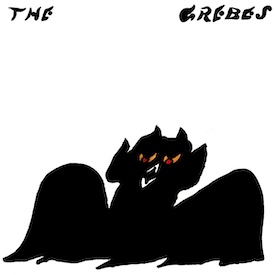 It’s always a promising sign when you google a new band and the results are primarily “weird bird facts”. So it goes with Portland’s The Grebes, a private affair for the past few years now shared openly with the world, fully formed and able. They feature members of bands that, if you recall, you recall warmly: Lithics, Shop Regulars, Woolen Men and The Spatulas, and while The Grebes are also a traditional rock band by most metrics, there’s no mistaking them for one of their members’ other projects. The Grebes were allegedly borne out of noisy guitar improv between guitarists Bob Desaulniers and Raf Spielman, though you’d never know it from the traditional verse-chorus structuring found here, at its best like Tyvek offering up a stormy rendition of “You’re Gonna Miss Me”. They take clear inspiration from regional teenage garage-rock of the ’60s, wild mop-top boys in hand-me-down suits who dared to mix original material among their Beatles and Stones covers at the high school dance. It’s about as timeless as rock n’ roll gets, and while The Grebes clearly find sonic influence in those Pebbles and Back From The Grave compilations, they don’t pretend to be crazed adolescents, Wild Thing-ing and Twisting and turning every knob to ten in a fit of hormonal activity. Rather, these songs are taut, sharply tailored and mature, almost verging on the suit-jacketed power-pop of Purple Hearts and The Tubs (albeit unpolished by comparison). “Yours” is my personal fave, though I find no reason to limit myself to anything less than the entire self-titled record.
Guiding Light Fear On My Own Time LP (Post Present Medium)
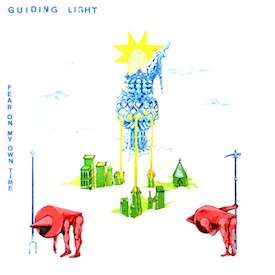 Tall Texan’s twelve-inch vinyl issue of Guiding Light’s debut EP featured the same five songs on both sides and I still managed to wear it out, so this full-length follow-up couldn’t have come sooner. And it absolutely rules! The Austin quartet’s post-punk perspective is nimble and proficient but never self-inflated – in a world of post-punk flatland ollies, they’re an unexpected heelflip down some stairs. I’m reminded of Vexx in the way that each member of the band operates on an advanced level while still retaining an undeniably punk quality, though musically-speaking, Guiding Light falls closer to the satisfying crevice between the first side of Dolly Mixture’s Demonstration Tapes and CCTV’s sole seven-inch EP. Probably because I’m still playing that Station Model Violence album at least once a week, I’m hearing a touch of them in Fear On My Own Time too – it’s that wild n’ clean guitar work with all six strings activated that does the trick. Maybe Station Model Violence performing Meat Puppets’ In A Car EP would be a more reasonably accurate way to describe Guiding Light’s compelling sound (and I hope they someday give it a whirl). Like all aforementioned bands, Guiding Light are talented songwriters, not aesthetic box-checkers; “Shackled By Lust” and “Fear On My Own Time” are an immediately catchy one-two punch, though all eight songs whiz by in a flash you’ll want to immediately relive. Vocalist Elise Cook got so caught up in the feeling that she accidentally sang multiple songs in fluent German. Haven’t we all been there before!
Gord High / Clockdin Home Rock 3xLP (The Unpopular Archives)
 Home Rock is an exhaustive compendium of one Gord High, produced with the unavoidably loving touch inherent within Canadians who uplift other Canadians. I don’t think The Unpopular Archives expects anyone outside of Ontario to be overly familiar with High, but Home Rock arrives as a formal exhibition of the local-legend’s sprawling, decades-long musical career, not a bid for overdue commercial success. This triple-LP treasury includes a selection of tracks produced as early as 1991 and as late as 2011 (High passed away in 2012), a 2006 album under his Clockdin alias, and a twenty-minute “disco” single (featuring “Gun School”, eleven minutes of dubby IDM research). Under aliases such as Puh, High Amiga and Clockdin, High’s musical interests were widespread and voracious. The label calls it “low-fi surf dub”, and while the bubble effects in “Herbdub” don’t betray this made-up genre name, that’s only a sliver of what High was up to. He lovingly messed with early Warp Records-style techno and jungle techniques, wonky electro-funk, computer-generated noise, hand-spliced breakbeats, and at least for “High Guitars”, slow-core indie-rock I’d expect Elliot Smith to start singing over. Some works reveal an interest in calming melodies, whereas others reject the notion outright (see “The Gunn”) – if you follow along intently, a rough map of High’s musical mind is sketched out, a generative cycle of sound experiments opening up new possibilities. If only all unheralded sonic voyagers had friends like The Unpopular Archives to keep their sounds alive after they’ve passed on.
The Hobknobs Helmets Off LP (12XU)
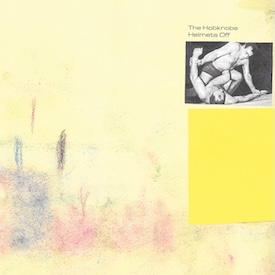 Lewsberg not twee enough for ya? Singer-songwriter Arie van Vliet is happy to turn things up a notch (or I guess down a notch) with The Hobknobs’ debut. It’s van Vliet’s new project with Yaël Dekker, and she handles keys and percussion with an appropriately mild touch, the two of them scurrying through these simple-on-the-surface pop tunes like mice in a library. They share vocals like well-mannered relatives, often enhanced by the tick-tock of a drum box and the bass-guitar of a friend named Jaap van der Velde. Van Vliet’s voice is so instantly recognizable that it’s impossible not to compare and contrast The Hobknobs to Lewsberg. On first go, I found myself missing the sturdy rock formations of Lewsberg, those subtly sly yet instantly memorable hooks that have brought me so much joy (please play “Cold Light Of Day” at my funeral). Lewsberg are small enough to fit in an elevator, but you could sneak The Hobknobs into a shoebox, teeny enough that you’ll want to pack them in some cotton balls to prevent any injury. It’s a great sound, though there are moments that miss for me: “Jennette McCurdy” is coffeehouse ready (pejorative), and while the hippity-hop of “Are You Looking For Something?” is particularly Lewsbergian (complimentary), I don’t think there’s any cool way to integrate the “Rain Rain Go Away” nursery rhyme into one’s twee-pop (and I wish to discourage any further attempts). On the other hand, “The Bowl”, “The Tide” and “Dictionary” are shining examples of The Hobknobs’ charming talents. The conversational “The Extra Mile” is my current favorite, an intimate Jim Jarmusch-esque short that beats out feature-lengths ten times its size.
Kinetic Orbital Strike The Terrifying Power Of Bombardment LP (no label)
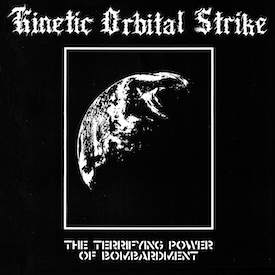 Having never figured out the button combination to unleash a kinetic orbital strike in Tekken 2, my gaming career was short-lived. I’m now forced to relive my failings through this ferocious Philly d-beat band, who have followed a couple of self-released EPs with a self-released full-length, The Terrifying Power Of Bombardment. D-beat hardcore is a battle of inches, as the style has been so thoroughly explored over the past, what, forty years?? You can’t really top the classics (feel free to argue the case for select Japanese exceptions in the comments) but you can still inject the formula with a fresh burst of fury. Kinetic Orbital Strike do well by it in a burly sort of way, calling to mind ’90s American crust as well as the requisite Discharge singles. I’m reminded of State Of Fear and Aus Rotten in the group’s tumbling depths; even within the understood confines of the style, their tempos vary from mid to urgent, and the vocals are gruff and succinct ala Doom. The (self-)production is dynamic and heavy without sacrificing its raw edge, landing much closer to the godliness of Cracked Cop Skulls than any overproduced stadium-crust sound. It’s an intentionally repetitive blueprint, but the album is not without its outlying flourishes: “No Dream At All” is a crust-metal headbanger’s delight (and by far the longest track at nearly three minutes), whereas “Essential Aid Denied” speaks directly to our moment. Blasting it loud enough that the neighbors can surely hear, I look out the window and expect to see Felix Havoc pulling a police helicopter out of the sky with his bare hands.
Non Plus Temps Conditional Bunker LP (Siltbreeze)
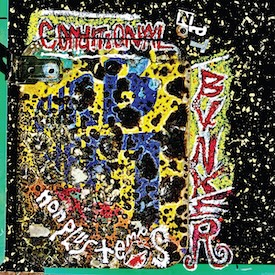 The Bay Area boasts a real rogue’s gallery of indie-pop colors, groups like Famous Mammals, Naked Roommate, Preening, The Reds Pinks & Purples, Blues Lawyer, Debt Rag, Fake Fruit and so on contributing to the region’s spinning kaleidoscope of sound. Of those I listed, the first three acts (if not more!) share personnel with Non Plus Temps. If Non Plus Temps isn’t the context wherein its players feel freest to pursue their least conventional ideas, I want to know which is, as Conditional Bunker is dub-punk armed with all the kitchen-sink percussion and dime-store synthesizer splurts it can bag and carry. I loved their 2022 full-length debut Desire Choir, and while much of the same infrastructure remains in place (dubby bass-lines, no-wave guitars, post-punk singing, the lingering sense (if not direct presence) of chaos), they’re going bigger and bolder here, like Exek, Minny Pops, Mo-Dettes and 3 Teens Kill 4 stitched together with a dull needle. That means the pop songs are poppier (“I Am Not Wise” hits with the sideways poise of early The Intelligence) and the weirdo elements are weirder (“Inside The Wall”, which directly follows, is as transgressively gassy as Nervous Gender). In a moment I’m thinking of Ric Ocasek’s power-pop, then Mark Stewart’s experimental dub, then the two of them doing that annoying mosh-pit move where they hold hands and swing in a circle until knocking into someone. It’s Siltbreeze music, but it’s also party music: convention-defying post-punk that doesn’t shut the door on keg-stands entirely.
The Strokes Reality Awaits LP (RCA / Cult)
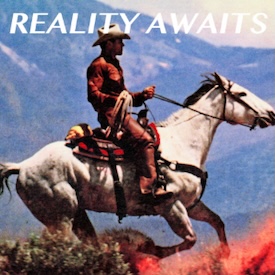 For me The Strokes are kinda like Metallica, in that the thrilling experience of their early material generated such enduring goodwill that I continue to check out whatever they do (while fully expectant of diminishing returns). There were a few bright spots in the Strokes’ orbit since they initially Saved Rock N’ Roll™, namely the solo Julian Casablancas album (bested only by Is This It!) and the first Voidz album, but it’s mostly been a drag after First Impressions Of Earth and the band’s initial hiatus. With Is This It garnering some nostalgic publicity as it hits twenty-five years old and Casablancas settling into this bizarre role of Bernie Bro prankster himbo (it… works?), I was as ready as anyone to enjoy some new Strokes songs, but Reality Awaits is a certified stinker. I don’t get it, really – the majority of the album lingers in a listless sort of slow-dance mode, a prefab Squarespace backdrop for Casablancas’s squiggly Autotune voice. His voice has held up great (and I am no Autotune hater), but the songs themselves are as satisfying as skim milk. I’m completely fine with their contemporary aesthetics, but where are the hits! Besides the silly bop of lead single “Going Shopping” (which really only stands out by comparison), Reality Awaits sounds like circa-2010 Maroon 5 without the hooks, or New Order running through Californication (again without the hooks), or the slower material on the last few Strokes albums (sadly, I must confirm, without even those meager hooks). If they put out another album after this, I’ll still be curious enough to check that out too, but it damn well better be their Lulu.
Sür Drōne T.I.T.S. LP (Frontier / Geza X)
 Like many of you I’m sure, I’ve often wondered what it’d be like if Raymond Pettibon had a band of his own. In fantasies such as these, the joy of wondering often beats the reality of knowing, which is unsurprisingly the case here. Pettibon is the lyricist, vocalist and artist-in-residence (duh) for Sür Drōne, a studio collaboration with multi-instrumentalist and soundtrack composer Daniel Adams. They released a CD-EP in 1998 (who knew and didn’t tell me??), which is collected here amidst seven other (newer?) songs, and if you’re hoping to hear a band that sounds how the nun on Slip It In and the puppet on My War looks, prepare for disappointment. Of course, Pettibon has always reveled in defying expectations, of lashing out reactionarily against the reactionaries, so no, this never had a chance of sounding like a Frontier Records classic (even though it’s actually the label that released it). If anything, T.I.T.S. is closer to his recent collaborative book with Mike Topp, The Frontier Index, a nonlinear cascade of jokes, stories and verbal riffage, now set to lightweight, joke-y college-rock. (“Dream Team” in particular sounds like the text from a Pettibon canvas set to music.) If you squint hard enough, you might hear some slight resemblance to adolescent punk-rock before passing out, but mostly the songs are loose, no-effort garage-rock numbers, some jangly and bopping, others “arty” or “psychedelic” in that late ’80s SST way – “Space Mutha” owes royalties to Meat Puppets, no doubt. Pettibon’s vocal affect is childlike and taunting… only he knows how he really feels, an opaqueness he clearly revels in upholding. As a punk, checking out T.I.T.S. is kind of your duty, but you should probably shoplift it from an indie record shop, or rig some online PayPal scam when ordering a copy – it’s what Pettibon would’ve wanted.
The Thirsty Giants Escape The Junkyard LP (Round Bale Recordings)
 As far as I knew, Round Bale Recordings purveyed psych-rock, experimental post-rock and guitars on the lighter side of the spectrum, which made it all the more surprising when The Thirsty Giants jumped out of the speakers and chased me around the room with their ferocious hardcore-punk. What a pleasant surprise! It’s actually pretty heartwarming, too: in 2022, Round Bale label-head David Perron played drums with the then-teenaged guitarist / vocalist Holden Perron (his son, I take it?), they brought on the younger Perron’s prior bandmate Hunter Thiesen on bass, and suddenly The Thirsty Giants took shape. I don’t know if Perron Senior is feeding Junior the best selection of punk to emulate or if he discovered it on his own, but The Thirsty Giants are hitting the right buttons for me. I’m hearing big similarities to Kaleidoscope, first-few-EPs-era 7 Seconds, Code Of Honor and a little Necros and Crucifix, but there are a few grungier tracks here too, a noise-rock update on Nirvana that The Thirsty Giants handle with similar conviction (I thought about the late-great Leather more than once). It’s hard-hitting and delivered with perfectly disgusted vocals, enough to remind me that somehow, all those great early hardcore records were actually made by kids under legal drinking age. For reference: if Minor Threat’s debut EP was released today, Ian MacKaye would’ve been born in 2007.
Tusen År Under Jord Sorgsendömet Fobos LP (Hosianna Mantra)
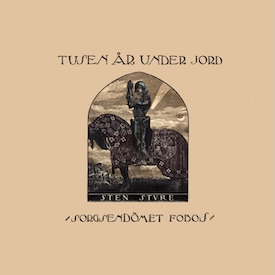 Hosianna Mantra falls within the network of reissue-centric labels from the great Nexus Records shop in Brooklyn. Its focus is on “spiritual” music that gazes back to ancient times for inspiration… intriguing obscurities rescued from the River Styx for one final spin. A world of kingdoms and fields lit only by fire! It’s alluring enough to captivate historians and artists alike, of which we can include the cryptic Swedish project Tusen År Under Jord. Sorgsendömet Fobos was originally released as a limited-edition cassette back in 2013 AD, but the Hosianna Mantra folks granted it a second life with this handsome slab of appropriately-black vinyl. On the cover, the vacant-eyed knight, horseback and in mid-prayer, concerned me that this might fall into an aesthetic I tend to avoid: gothic folk with Renn Faire signifiers. Luckily, Hosianna Mantra wouldn’t do us dirty like that – rather, this album is an engrossing exercise in brooding loop-based minimalism. The circular crackle of dusty vinyl is ever present over looping strings… mournful melodies manifest themselves from some long-forgotten time. These fractured, shadowy Euro waltzes probably played softly in the heads of World War 1 soldiers as they took their final breaths on some godforsaken Slovakian battlefield. The disintegrated textures of William Basinski are prominent, though a more apt comparison might be Brannten Schnüre, whose gloomy industrial-folk collages conjure similar images of castle ruins, dark forests and watchful eyes. Gather your most herbaceous and medicinal twigs, ’cause tonight we’re brewing some Tusen År Under Jord tea.
Vital Stress Vital Stress 7″ (no label)
 I saw Cloud Nothings for the first time a few months back and was amazed at how hard they ripped. Society has failed me yet again by not cluing me into this earlier! While it was a true trio effort, Jayson Gerycz was positioned front and center for good reason, a hard-hitting whirlwind of a drummer who, much like Ric Flair, elevates the talent of anyone he’s sparring with. He’s got a variety of projects happening, the newest of which might be Vital Stress, another hard-cracking punk band from a town that’s already way over quota, Cleveland. Don’t let the cute cat on the cover fool you – Vital Stress has some real dirt under their nails, playing motor-punk riffs with the energy (not the speed) of hardcore-punk. They packed six songs on this seven-inch and I’m glad they did, as I want as much of this as I can get, songs that remind me of Pink Lincolns, Land Speed Record, Dead Boys, Easy Action and Reagan Youth, but smack immediate for the present moment, not beholden to the past. At this stage in their existence (very early), they’re one of those dangerous opening bands that comfortable touring bands should fear – there’s no chillaxing in the green room when Vital Stress are already on stage and completely ravaging the crowd. You should’ve opted for one of those watered-down replicas of your own indie band that the unimaginative booker originally recommended instead!
 Back to top